CraveU

The Enduring Enigma of Red Hood: A Deep Dive

Explore the complex world of Red Hood, Gotham's anti-hero. From Robin to resurrected vigilante, dive into Jason Todd's journey and impact.
Start Now
craveu cover image

The Original Red Hood: A Villain's Genesis

To truly understand Jason Todd's journey, we must first acknowledge the original bearer of the Red Hood mantle. Before Jason, the Red Hood was a criminal identity, most famously donned by a desperate man who would later become Batman's arch-nemesis: the Joker. In his earliest origin story, depicted in Detective Comics #168 (February 1951), this unnamed criminal, attempting to rob a playing card company, plunged into a vat of chemicals while escaping Batman. He emerged disfigured, driven to insanity, and reborn as the Clown Prince of Crime. This iconic origin, while subject to various retcons and an unreliable narrator, cemented the Red Hood as a precursor to Gotham’s ultimate villain. It’s a chilling irony, a macabre joke played by fate, that the symbol of the Joker's twisted birth would later be reclaimed by the very victim of his most heinous act. This historical context provides a profound layer to Jason Todd's choice of moniker. It wasn't just a random alias; it was a direct challenge, a reclamation of a symbol of trauma, turning it into a weapon against the very entity that created it. It’s akin to someone who survived a house fire rebuilding their life on the same scorched earth, not out of stubbornness, but to prove that destruction doesn't have the final say.

Jason Todd: The Impulsive Robin

Jason Todd’s initial introduction into the Batman mythos was as complex and tumultuous as the character he would become. First appearing in Batman #357 in March 1983, he was conceived as the successor to Dick Grayson, the original Robin. Post-Crisis on Infinite Earths, his origin was significantly revised. No longer a circus acrobat like Grayson, Jason was re-envisioned as a street urchin, a petty thief from Gotham's grittier corners whom Batman discovered trying to steal the tires off the Batmobile. This new origin instantly differentiated him, painting him as a rougher, more impulsive protégé, a stark contrast to Dick’s more acrobatic and cheerful disposition. My own experience with Jason's early Robin days was one of mixed emotions. Reading his stories, I remember feeling a blend of sympathy for his harsh upbringing and frustration with his often headstrong, even violent, tendencies. He wasn't the sunny, approachable Robin readers had grown accustomed to; he was a raw nerve, a simmering cauldron of anger and a fiercely protective instinct. This aggression, particularly towards rapists and child abusers, hinted at a deeper compassion, but also a willingness to cross lines that Batman strictly adhered to. It was a subtle, yet significant, deviation from the established dynamic, setting the stage for the cataclysm that would define his legacy. Batman, despite recognizing Jason's "violent streak," took him in, hoping to mold him into a hero. It was an act of profound hope, and ultimately, profound failure.

A Death in the Family: The Crowbar and the Bomb

The defining moment in Jason Todd's history, the tragedy that would forever etch him into the annals of comic book lore, was his death in the infamous "A Death in the Family" storyline (1988). During a personal quest to find his long-lost mother, Jason tragically fell into the Joker's clutches. What followed was a brutal, horrifying sequence: the Joker savagely beat Jason with a crowbar, leaving him battered and broken in a warehouse rigged with a timed bomb. Batman arrived too late, the warehouse exploding, seemingly claiming Robin’s life. What makes this event even more impactful, and a fascinating piece of comic book history, is that Jason's fate was decided by a fan poll. Readers were given a 1-900 number to vote on whether Jason should live or die. The result was a narrow majority in favor of his death, a decision that sent shockwaves through the comic world and haunted Batman for years, becoming his greatest failure. It was a visceral reminder of the stakes involved in vigilantism, a grim testament to the fragility of life in a city like Gotham. For Bruce Wayne, the loss of Jason was not merely the death of a sidekick, but the death of a son, a failure he carried like a lead weight in his soul, forever questioning his methods and his ability to protect those he loved.

The Resurrection: From Grave to Vengeance

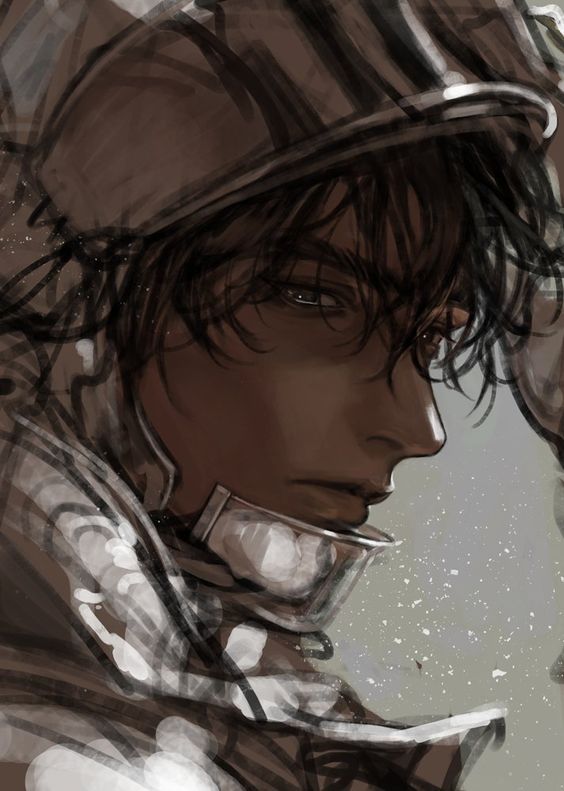
But in the world of comics, death is often a revolving door. Jason Todd remained dead for years, a somber monument in the Batcave, serving as a constant reminder of Batman's failure. Then, in the mid-2000s, writer Judd Winick embarked on a bold and controversial storyline: "Under the Hood" (2005). The mystery of a new, highly effective, and lethally brutal vigilante operating in Gotham began to unfold. This new figure, the Red Hood, was systematically dismantling Black Mask's criminal empire, employing tactics that mirrored Batman's, yet crossed every line the Dark Knight held sacred: he used guns, and he killed. The shocking revelation came in Batman #638: the Red Hood was none other than Jason Todd, alive and filled with a burning rage. His resurrection was attributed to a combination of factors, often involving the Lazarus Pit, a mystical pool that restores life but often with unforeseen psychological side effects. Some continuities also involve Superboy-Prime's reality-altering punches contributing to his return. Regardless of the exact "how," Jason's return was transformative. He was no longer the impulsive Robin; he was a hardened, cynical, and vengeful figure. His anger wasn't just directed at the criminals he brutalized; it was primarily aimed at Batman. Jason believed Batman had failed him not by letting him die, but by allowing the Joker, his murderer, to live. This distinction is crucial to understanding Red Hood's fundamental conflict with his former mentor. It wasn't about saving him, but about avenging him, about breaking Batman's sacred "no-kill" rule for the sake of true justice. This ideological chasm became the bedrock of their strained relationship. It was a son screaming at his father, "You could have stopped him! You should have stopped him!" My first encounter with "Under the Red Hood" left an indelible mark. The raw emotion, the philosophical debate between Batman and Jason, and the sheer audacity of bringing back such a pivotal character in such a transformed state was captivating. It felt less like a superhero story and more like a Greek tragedy, examining the consequences of grief, the allure of vengeance, and the burden of moral codes in a lawless world.

The Anti-Hero's Code: Red Hood's Methods and Motivations

As the Red Hood, Jason Todd operates in the grey areas of Gotham. He is undeniably a "vigilante anti-hero who fights to protect Gotham City," but his methods are starkly different from the rest of the Bat-Family. His signature weapons are a pair of handguns, a deliberate and provocative rejection of Batman’s iconic aversion to firearms. While he uses lethal force, he is not portrayed as a indiscriminate killer like some other vigilantes. He "usually digs down deep to find the restraint not to become an executioner," even sparing the Joker's life when he had the chance. This restraint, however slim, hints at the lingering influence of his past as Robin and the inherent goodness that still flickers within him. His motivations are complex. Beneath the "brash and rageful" exterior that some recent portrayals have emphasized, Jason is "strategic, serious, and reserved". He is driven by a deep-seated need for control, a desire to prevent others from suffering the kind of trauma he endured. He has a particular compassion for "street kids and trauma victims," often taking them under his wing, even if his mentorship is unconventional. His willingness to push people away, to incite anger, and to even set up scenarios where others might fail him is a "defense mechanism" rooted in his profound history of betrayal and disappointment. He gives people opportunities to let him down, almost as if bracing himself for the inevitable. His training after his resurrection was extensive. He traveled the world, learning various martial arts styles just as Batman did. He received training from the All-Caste, an order of warriors, and was also involved with the League of Assassins and Talia al Ghul, who played a significant role in his resurrection and subsequent training. This diverse and brutal education made him a formidable combatant, an "expert in hand-to-hand fighting and all manner of high tech gadgets". His abilities include peak human strength, speed, stamina, agility, and durability, alongside master-level martial arts, expert marksmanship, tactical genius, and detective skills. More recently, in some continuities and adaptations like the Gotham Knights video game, he has even gained mystical abilities linked to his resurrection, including the power to summon soul-powered blades or negate magic. This addition, while a point of discussion among fans, further distinguishes him within the Bat-Family.

Key Storylines and Evolutions

Red Hood's journey through the comics has seen several distinct phases, each shaping his identity: * Red Hood: The Lost Days: This miniseries delved into the period between Jason's resurrection and his reappearance as Red Hood, detailing his unstable state after the Lazarus Pit, his training, and his growing resentment towards Batman and the Joker. It's essential for understanding the psychological torment he endured. * Red Hood and the Outlaws (New 52 & Rebirth): Following the "Flashpoint" storyline and the subsequent New 52 reboot, Red Hood became the leader of his own anti-hero team, the Outlaws, initially comprised of Starfire and Roy Harper (Arsenal). This series cemented his role as a more nuanced anti-hero, often at odds with the Bat-Family but ultimately striving for good, albeit through his own violent code. The Rebirth era continued this iteration, focusing on his redemption and deepening his relationships with his teammates. * Red Hood/Arsenal: After the Outlaws disbanded, Jason briefly partnered with Roy Harper as "heroes for hire," further exploring their dynamic outside a team context. * Red Hood: Outlaw: This title continued Jason’s solo adventures, further developing his character and his attempts to forge his own path, often putting him in morally ambiguous situations. * Red Hood: The Hill (2024-2025): In a significant recent development, Jason Todd has found a new purpose in Gotham’s "Hill" district. This series, "Red Hood: The Hill" (collected in a trade paperback in February 2025), sees Jason join forces with a local vigilante group called "The Watch" to protect a community that feels abandoned by traditional law enforcement and even Batman. It’s a grounded, community-focused role that allows Red Hood to apply his unique brand of justice to a specific, underserved part of Gotham. This narrative choice reflects a growing trend in comics to focus on localized heroism and the direct impact characters have on their communities. It’s a departure from globe-trotting adventures, bringing Jason back to the street-level grit where his character truly shines.

Red Hood in Other Media (Beyond the Panels)

Red Hood's compelling narrative has transcended comic book pages, making significant impacts across various media, further solidifying his status as a fan-favorite character. * Animation: * Batman: Under the Red Hood (2010): This animated film is widely considered the definitive adaptation of Jason Todd's return. It faithfully translates the core story, showcasing the raw emotion and philosophical clash between Batman, Red Hood, and the Joker. It's often recommended as the starting point for anyone wanting to understand the character. * Batman: Death in the Family (2020): An interactive animated film that allows viewers to choose different outcomes for Jason's fate, offering a meta-commentary on the original fan vote. * He has also made appearances or been referenced in shows like Young Justice, Titans (where Curran Walters portrays him in live-action, eventually becoming Red Hood), and The Harley Quinn Show. * Video Games: * Batman: Arkham Knight (2015): This game offers a reimagined take on Jason Todd’s story, where he initially appears as the Arkham Knight, a new villain obsessed with Batman, before eventually being revealed as Jason and later adopting the Red Hood persona as DLC. This iteration provided a fresh, albeit different, perspective on his trauma and eventual emergence. * Gotham Knights (2022): Red Hood is a playable character in this game, alongside Nightwing, Batgirl, and Robin (Tim Drake), allowing players to directly control his unique combat style, including his newly introduced mystical abilities. This game embraces his Brawler and Marksman skills, giving players a visceral experience of his brutal efficiency. These adaptations, while sometimes taking liberties with his origin or powers, consistently emphasize his core identity as a character defined by trauma, a thirst for justice, and a complicated relationship with Batman's legacy. They showcase how deeply his story resonates, reflecting universal themes of loss, revenge, and the arduous path to self-acceptance.

The Red Hood in 2025: Current Trajectories and Future Whispers

As of 2025, the narrative threads surrounding Red Hood continue to weave a complex tapestry. We've seen significant movement for Jason Todd, both in new publications and collected editions reflecting his recent adventures. The release of "RED HOOD: THE HILL (2024)" trade paperback in February 2025 consolidates his latest localized mission, highlighting his commitment to protecting vulnerable communities. This storyline underlines his evolution from a purely vengeance-driven anti-hero to someone actively seeking to prevent the kind of suffering he experienced, focusing his lethal skills on Gotham's often-forgotten corners. It's a pragmatic, on-the-ground approach to heroism that feels uniquely Red Hood. Furthermore, the comic landscape in 2025 is revisiting Jason's earliest days. The new miniseries, "Robin and Batman: Jason Todd," with its first issue arriving on June 11, 2025, promises to "redefine the origins of the black sheep of the Batman family". This is an intriguing development, suggesting a deeper exploration of his time as Robin, perhaps offering new insights into the "violent streak" Batman observed early on, and how it foreshadowed his eventual transformation. For long-time fans, this retro-active development offers a chance to see familiar events through a fresh lens, potentially adding new layers to his already rich history. Perhaps most significantly, Red Hood is making a grand return to Batman’s immediate narrative. As seen in the final pages of "Batman and Robin #17" (2025), Jason Todd is stepping into the void left by Damian Wayne’s identity crisis as Robin. This move positions Red Hood squarely back at the heart of the Bat-Family dynamic, hinting at a renewed partnership, albeit a complicated one, with Batman himself. This signifies a recognition of his enduring importance to the mythos and his potential for growth within the core Bat-titles. My personal excitement for this development is palpable; seeing Jason back as a main player, particularly in a way that respects his nuanced character, is something many long-time fans have awaited. It’s a delicate dance: can Batman trust Red Hood’s methods, and can Red Hood truly accept working alongside his adoptive father without their ideological differences erupting into conflict? Their interaction in Batman and Robin #17, where Jason affectionately calls Bruce "old man," despite Bruce's protests of needing no partner, speaks volumes about the deep-seated, if fractured, love between them. However, not all recent portrayals have been met with universal acclaim. A preview for Juni Ba’s The Boy Wonder (May 2024) characterized Red Hood as merely "brash and rageful," a description that raised concerns among fans about potentially undermining nearly two decades of complex character development. This highlights the ongoing challenge for writers: how to honor Red Hood’s core traits while acknowledging his journey of growth and redemption without regressing him to simplistic archetypes. There are also intriguing speculative threads. The ongoing "The Joker: The Man Who Stopped Laughing" series, and specifically "From the DC Vault: Death in the Family: Robin Lives! #4" (October 2024), toy with the chilling possibility of Jason Todd becoming a "second Joker". While purely theoretical or an Elseworlds-style exploration, it underscores the persistent shadow the Joker casts over Jason's existence and the fragile line he walks between justice and madness. It’s a testament to his character's depth that such a dark turn, while shocking, still feels within the realm of his tragic potential.

Why Red Hood Resonates: A Reflection of Our Own Struggles

The enduring appeal of Red Hood lies in his profound relatability, despite his extraordinary circumstances. We all, at some point, grapple with trauma, loss, and the temptation to abandon our principles in the face of injustice. Jason Todd’s story is a magnified mirror reflecting these very human struggles. Think of it like this: imagine you've been deeply hurt, betrayed by someone you trusted, and then left to pick up the pieces while your tormentor walks free. How much easier would it be to lash out, to seek vengeance, to discard the rules that seem to protect the wicked? Red Hood embodies that raw, understandable impulse. He’s the personification of the question, "What if Batman did kill the Joker?" He represents the road not taken by his mentor, a brutal efficiency born from unimaginable pain. His journey is a testament to the messy, non-linear process of healing and self-discovery. He didn't just come back from the dead; he came back changed. He had to reconcile the Robin he was with the killer he became, and then strive to find a new identity in between. This perpetual struggle to define himself – as a villain, a hero, an outlaw, a protector of "The Hill" – resonates because it mirrors our own efforts to navigate identity shifts throughout life, whether after a major setback, a career change, or a personal transformation. The idea that someone so fundamentally broken can still strive for good, even if imperfectly, is a powerful message. He is a character who challenges the very core of what it means to be a hero. Batman’s unwavering moral compass is admirable, but Red Hood’s flawed, visceral approach often feels more grounded in the grim reality of Gotham. He asks uncomfortable questions about the effectiveness of traditional heroism and the limits of forgiveness. This moral ambiguity is not a weakness; it's his strength, creating compelling narratives and sparking endless debates among fans.

The Legacy of the Outlaw: Impact and Enduring Appeal

Red Hood's impact on the Batman mythos is undeniable. His very existence is a constant, painful reminder of Batman's most significant failure, adding layers of guilt and complexity to the Dark Knight's psyche. He complicates the Bat-Family dynamic, serving as both an estranged son and a formidable, if controversial, ally. His presence challenges the other Robins and Batman himself to confront their own ideologies and methods. Beyond his immediate family, Red Hood represents a broader commentary on justice in a world where pure heroism sometimes feels insufficient. He fills a niche for readers who appreciate a grittier, more pragmatic approach to crime-fighting, a hero who isn’t afraid to get his hands dirty, even if it means staining them with blood. His appeal often lies in this willingness to do "what needs to be done," a stark contrast to the more idealized heroes. In 2025, Red Hood continues to evolve. His return to the core Batman and Robin narrative, coupled with his localized efforts in The Hill, demonstrates a concerted effort by DC Comics to deepen his character and integrate him more fully into the contemporary DC Universe. He’s not just a character defined by his past trauma, but one actively forging a new future, grappling with leadership, community, and the ever-present shadow of his history. Whether he's leading a team of misfits, protecting a forgotten neighborhood, or begrudgingly fighting alongside Batman, Red Hood remains one of DC's most fascinating and human characters—a symbol of the enduring fight, not just against crime, but against one's own demons. His journey, marked by loss and resurrection, serves as a poignant reminder that even from the deepest pits of despair, a new, albeit scarred, path can be forged. The Red Hood is a constant whisper in Gotham’s ear: sometimes, to heal the deepest wounds, you first have to acknowledge the dark.

Features

NSFW AI Chat with Top-Tier Models

Experience the most advanced NSFW AI chatbot technology with models like GPT-4, Claude, and Grok. Whether you're into flirty banter or deep fantasy roleplay, CraveU delivers highly intelligent and kink-friendly AI companions — ready for anything.

NSFW AI Chat with Top-Tier Models feature illustration

Real-Time AI Image Roleplay

Go beyond words with real-time AI image generation that brings your chats to life. Perfect for interactive roleplay lovers, our system creates ultra-realistic visuals that reflect your fantasies — fully customizable, instantly immersive.

Real-Time AI Image Roleplay feature illustration

Explore & Create Custom Roleplay Characters

Browse millions of AI characters — from popular anime and gaming icons to unique original characters (OCs) crafted by our global community. Want full control? Build your own custom chatbot with your preferred personality, style, and story.

Explore & Create Custom Roleplay Characters feature illustration

Your Ideal AI Girlfriend or Boyfriend

Looking for a romantic AI companion? Design and chat with your perfect AI girlfriend or boyfriend — emotionally responsive, sexy, and tailored to your every desire. Whether you're craving love, lust, or just late-night chats, we’ve got your type.

Your Ideal AI Girlfriend or Boyfriend feature illustration

FAQs

What makes CraveU AI different from other AI chat platforms?

CraveU stands out by combining real-time AI image generation with immersive roleplay chats. While most platforms offer just text, we bring your fantasies to life with visual scenes that match your conversations. Plus, we support top-tier models like GPT-4, Claude, Grok, and more — giving you the most realistic, responsive AI experience available.

What is SceneSnap?

SceneSnap is CraveU’s exclusive feature that generates images in real time based on your chat. Whether you're deep into a romantic story or a spicy fantasy, SceneSnap creates high-resolution visuals that match the moment. It's like watching your imagination unfold — making every roleplay session more vivid, personal, and unforgettable.

Are my chats secure and private?

Are my chats secure and private?
CraveU AI
Experience immersive NSFW AI chat with Craveu AI. Engage in raw, uncensored conversations and deep roleplay with no filters, no limits. Your story, your rules.
© 2025 CraveU AI All Rights Reserved