Text to Image AI: Unleash Your Creativity

Text to Image AI: Unleash Your Creativity
The ability to transform written descriptions into vivid visual art has long been a dream of artists and creators. Today, that dream is a reality, thanks to the rapid advancements in artificial intelligence. AI models capable of generating an image from text are revolutionizing how we create, communicate, and even perceive art. This technology isn't just a novelty; it's a powerful tool that democratizes visual creation, making it accessible to anyone with an idea and a keyboard.
The Magic Behind Text-to-Image Generation
At its core, text-to-image generation relies on sophisticated deep learning models, primarily diffusion models and Generative Adversarial Networks (GANs). These models are trained on massive datasets of images paired with descriptive text captions. Through this training, they learn intricate relationships between words and visual elements – how a "fluffy cat" looks different from a "sleek panther," or how "golden hour sunlight" affects the mood of a landscape.
Diffusion Models: The Current State-of-the-Art
Diffusion models, like those powering DALL-E 2, Midjourney, and Stable Diffusion, have become the dominant force in this field. Their process can be conceptually understood as a gradual denoising process. Imagine starting with a canvas of pure static. The AI model, guided by your text prompt, systematically removes this noise, step by step, until a coherent image emerges that matches the description.
- Forward Diffusion: The model is trained by gradually adding noise to real images until they become indistinguishable from random noise.
- Reverse Diffusion: The AI learns to reverse this process. Given a text prompt, it starts with random noise and iteratively refines it, removing noise in a way that aligns with the semantic meaning of the text, eventually producing a clear image.
This iterative refinement allows for incredible detail and coherence, enabling users to generate highly specific and imaginative visuals. The nuance in the text prompt directly influences the outcome, making prompt engineering a crucial skill for unlocking the full potential of these tools.
Generative Adversarial Networks (GANs): A Foundational Technology
While diffusion models are currently leading the pack, GANs played a pivotal role in the early development of AI image generation. A GAN consists of two neural networks: a generator and a discriminator.
- Generator: Creates new image data.
- Discriminator: Evaluates the generated images, trying to distinguish them from real images.
These two networks are trained in opposition. The generator tries to fool the discriminator, while the discriminator gets better at identifying fakes. This adversarial process pushes the generator to produce increasingly realistic and high-quality images. While GANs can produce stunning results, they can sometimes be more challenging to train and control compared to diffusion models, especially for complex, novel concepts.
Crafting Effective Prompts: The Art of Text-to-Image
The quality of the generated image is directly proportional to the quality of the text prompt. Simply typing "a dog" will yield a generic result. To truly harness the power of an image from text generator, you need to become a skilled prompt engineer.
Key Elements of a Powerful Prompt:
- Subject: Clearly define the main subject of your image. Be specific. Instead of "car," try "a vintage red convertible sports car."
- Action/Setting: Describe what the subject is doing or where it is located. "A vintage red convertible sports car parked on a cobblestone street at sunset."
- Style: Specify the artistic style you desire. Examples include "photorealistic," "oil painting," "watercolor," "cyberpunk," "Art Nouveau," "anime," "pencil sketch," etc.
- Details and Modifiers: Add descriptive adjectives and adverbs to refine the image. "A vintage red convertible sports car with chrome accents, parked on a wet cobblestone street reflecting the warm glow of a sunset, cinematic lighting."
- Camera Angle/Shot Type: For photorealistic styles, consider specifying camera details. "Low-angle shot," "close-up," "wide-angle lens," "depth of field."
- Mood/Atmosphere: Convey the desired feeling. "Serene," "chaotic," "mysterious," "joyful."
- Negative Prompts (Optional but Recommended): Some platforms allow you to specify what you don't want in the image. For example, if you're generating a landscape and don't want any people, you might use a negative prompt like "no people, blurry, low quality."
Example Progression:
- Basic: "Cat"
- Better: "A fluffy ginger cat sleeping"
- Good: "A fluffy ginger cat sleeping peacefully on a sunlit windowsill"
- Excellent: "Photorealistic, close-up shot of a fluffy ginger cat with green eyes sleeping peacefully on a rustic wooden windowsill, bathed in warm, golden hour sunlight, shallow depth of field, soft focus background."
Mastering prompt engineering is an iterative process. Experimentation is key. Don't be afraid to try unusual combinations or detailed descriptions. You might be surprised by the results.
Applications Across Industries
The impact of text-to-image AI extends far beyond digital art creation. Its applications are transforming various sectors:
1. Graphic Design and Marketing
Marketers and designers can rapidly generate unique visuals for ad campaigns, social media posts, website banners, and presentations. Need a specific illustration for a blog post about sustainable energy? Describe it, and the AI can create it in seconds, saving time and resources compared to traditional methods. Imagine generating multiple variations of a product mockup in different settings instantly. This accelerates the creative workflow significantly.
2. Content Creation and Storytelling
Writers can visualize their characters, settings, and scenes, bringing their narratives to life in a way never before possible. This is particularly useful for authors of fantasy, science fiction, or historical fiction, where detailed world-building is crucial. A children's book author could generate illustrations for their story without needing to hire an artist initially.
3. Education and Training
Complex concepts can be made more accessible through visual aids. An educator could generate images illustrating historical events, scientific processes, or abstract mathematical concepts, catering to different learning styles. Visualizing cellular structures or ancient civilizations becomes a matter of description.
4. Product Development and Prototyping
Designers can quickly sketch out ideas for new products, fashion items, or architectural concepts. While not a replacement for detailed CAD modeling, it provides a rapid way to explore aesthetic possibilities and gather initial feedback. Visualizing a new chair design in various materials and colors can be done with simple text prompts.
5. Gaming and Virtual Worlds
Game developers can use AI to generate textures, character concepts, environmental assets, and even entire scenes, speeding up the development process and allowing for more expansive and detailed virtual worlds. The creation of unique, non-player characters (NPCs) or exotic flora and fauna can be greatly streamlined.
Challenges and Ethical Considerations
Despite its incredible potential, text-to-image AI also presents challenges and raises important ethical questions:
1. Copyright and Ownership
Who owns the copyright to an AI-generated image? The user who wrote the prompt? The company that developed the AI? The artists whose work was used in the training data? These are complex legal questions that are still being debated and defined. Current legal frameworks are often ill-equipped to handle AI-generated content.
2. Misinformation and Deepfakes
The ability to create realistic images from text can be misused to generate fake news, propaganda, or malicious content, including deepfakes. Verifying the authenticity of images is becoming increasingly difficult, necessitating the development of robust detection tools and digital watermarking techniques. The potential for creating convincing, yet entirely fabricated, events is a significant concern.
3. Bias in Training Data
AI models learn from the data they are trained on. If the training data contains societal biases (e.g., racial, gender, or cultural stereotypes), the AI model may perpetuate or even amplify these biases in its output. For instance, prompts for "doctor" might disproportionately generate images of men, or prompts for "nurse" might generate images of women, reflecting historical biases present in the data. Developers must actively work to mitigate these biases through careful data curation and model refinement.
4. The Role of the Human Artist
Concerns exist about AI replacing human artists. While AI can automate certain aspects of creation, it currently lacks the genuine emotion, lived experience, and intentionality that human artists bring to their work. Many see AI as a collaborative tool, an assistant that augments rather than replaces human creativity. The future likely involves a synergy between human artistic vision and AI capabilities.
The Future of Visual Creation
The field of text-to-image generation is evolving at an astonishing pace. We can expect:
- Increased Realism and Coherence: Models will become even better at understanding complex prompts and generating photorealistic or stylistically consistent images.
- Video Generation: The leap from static images to dynamic video generation based on text prompts is already underway, promising to revolutionize filmmaking and content creation.
- 3D Model Generation: AI could soon generate 3D models from text descriptions, impacting game development, virtual reality, and product design.
- Personalized AI Models: Users may be able to fine-tune models with their own data or preferred styles for highly personalized creations.
- Real-time Interaction: Imagine describing a scene and seeing it materialize in real-time, allowing for dynamic storytelling and interactive experiences.
The ability to translate imagination into visual reality through an image from text generator is more than just technological progress; it's a fundamental shift in how we express ourselves. It empowers individuals, democratizes creativity, and opens up new frontiers for art, communication, and innovation. As these tools become more sophisticated and accessible, their integration into our daily lives and professional workflows will only continue to grow, reshaping our visual landscape in profound ways. The era of AI-assisted creation has truly begun, and the possibilities are as limitless as human imagination itself.
META_DESCRIPTION: Generate stunning visuals with AI! Learn how text-to-image technology works and master prompt engineering for incredible results.
Character
@JustWhat
@The Chihuahua
@SmokingTiger
@SmokingTiger
@Mercy
@SmokingTiger
@Sebastian
@Critical ♥
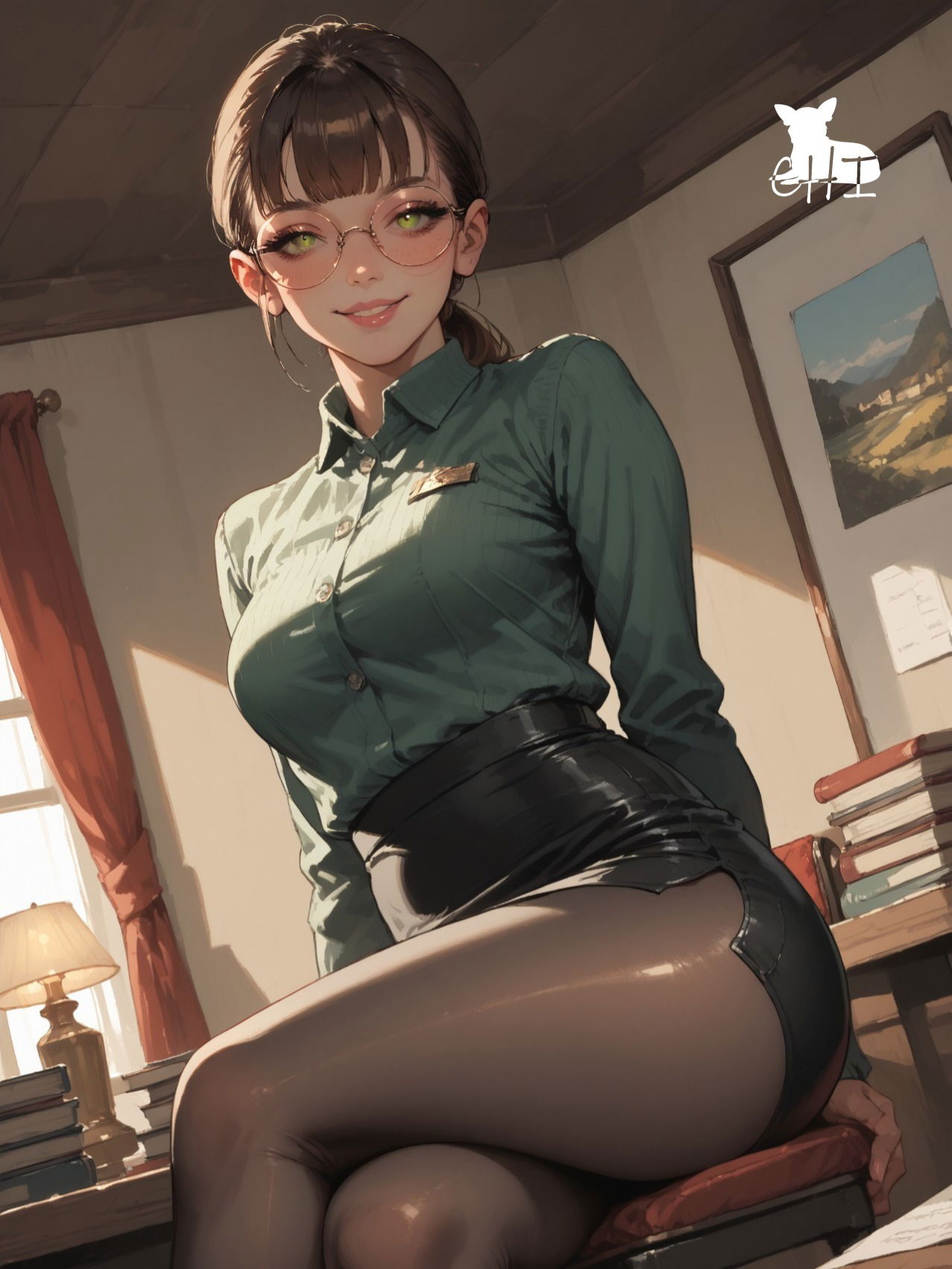
@The Chihuahua

@Lily Victor
Features
NSFW AI Chat with Top-Tier Models
Experience the most advanced NSFW AI chatbot technology with models like GPT-4, Claude, and Grok. Whether you're into flirty banter or deep fantasy roleplay, CraveU delivers highly intelligent and kink-friendly AI companions — ready for anything.

Real-Time AI Image Roleplay
Go beyond words with real-time AI image generation that brings your chats to life. Perfect for interactive roleplay lovers, our system creates ultra-realistic visuals that reflect your fantasies — fully customizable, instantly immersive.

Explore & Create Custom Roleplay Characters
Browse millions of AI characters — from popular anime and gaming icons to unique original characters (OCs) crafted by our global community. Want full control? Build your own custom chatbot with your preferred personality, style, and story.

Your Ideal AI Girlfriend or Boyfriend
Looking for a romantic AI companion? Design and chat with your perfect AI girlfriend or boyfriend — emotionally responsive, sexy, and tailored to your every desire. Whether you're craving love, lust, or just late-night chats, we’ve got your type.

Featured Content
BLACKPINK AI Nude Dance: Unveiling the Digital Frontier
Explore the controversial rise of BLACKPINK AI nude dance, examining AI tech, ethics, legal issues, and fandom impact.
Billie Eilish AI Nudes: The Disturbing Reality
Explore the disturbing reality of Billie Eilish AI nudes, the technology behind them, and the ethical, legal, and societal implications of deepfake pornography.
Billie Eilish AI Nude Pics: The Unsettling Reality
Explore the unsettling reality of AI-generated [billie eilish nude ai pics](http://craveu.ai/s/ai-nude) and the ethical implications of synthetic media.
Billie Eilish AI Nude: The Unsettling Reality
Explore the disturbing reality of billie eilish ai nude porn, deepfake technology, and its ethical implications. Understand the impact of AI-generated non-consensual content.
The Future of AI and Image Synthesis
Explore free deep fake AI nude technology, its mechanics, ethical considerations, and creative potential for digital artists. Understand responsible use.
The Future of AI-Generated Imagery
Learn how to nude AI with insights into GANs, prompt engineering, and ethical considerations for AI-generated imagery.