Practice Makes Perfect

Master Drawing Male Anime Characters
Unleash your inner artist and learn how to draw male anime characters with this comprehensive guide. From understanding fundamental anatomy to mastering stylistic nuances, we'll delve deep into the techniques that bring your favorite anime heroes to life. Whether you're a beginner struggling with proportions or an intermediate artist looking to refine your skills, this guide is packed with actionable advice and expert insights.
The Foundation: Understanding Anime Anatomy
Before you even pick up a pencil, it's crucial to grasp the underlying anatomical structure of male anime characters. Unlike realistic human anatomy, anime often employs stylized proportions to emphasize certain features and convey personality.
Skeletal Structure and Proportions
Anime characters, especially males, tend to have a more elongated and angular build. Think about the typical superhero physique – broad shoulders, a narrower waist, and long limbs. A common starting point is the "head unit" system, where the character's height is measured in multiples of their head size.
- Head: The head is the most crucial element for establishing character. Anime heads are often slightly larger in proportion to the body than in realistic art, especially for younger characters. Pay attention to the placement of eyes, nose, and mouth, which are typically positioned lower on the face.
- Torso: The male anime torso is often depicted with a V-shape, broad at the shoulders and tapering towards the waist. The ribcage is usually more pronounced, and the abdomen can be flatter or even slightly muscular.
- Limbs: Arms and legs are generally longer and leaner than in realistic proportions. The joints – elbows, wrists, knees, and ankles – are often simplified and can be depicted with sharper angles.
Muscle Definition and Form
While not always hyper-realistic, male anime characters often showcase subtle to pronounced muscle definition. Understanding basic muscle groups will help you add believable form and dynamism to your drawings.
- Shoulders and Chest: Broad shoulders are a hallmark of many male anime characters. The deltoids (shoulder muscles) and pectorals (chest muscles) should flow naturally from the torso. Avoid drawing them as solid blocks; instead, think about the underlying bone structure and how muscles attach.
- Abdomen and Back: Even lean characters have some abdominal definition. For more muscular characters, focus on the obliques and the rectus abdominis. The back muscles, like the latissimus dorsi, contribute to that desirable V-taper.
- Arms and Legs: Biceps, triceps, forearms, quadriceps, and calves can be simplified but should still suggest the underlying musculature. Think about how these muscles bulge and contract when the limb is in motion.
Mastering Facial Features
The face is where a character's personality truly shines. Anime facial features are highly stylized, and getting them right is key to creating compelling male characters.
The Eyes: Windows to the Soul
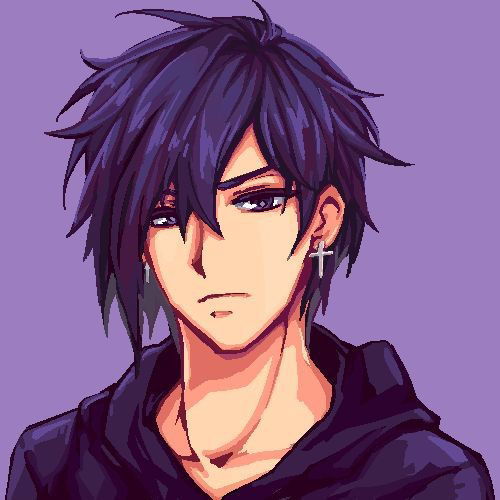
Anime eyes are iconic. For male characters, they are often sharper, more angular, and less rounded than female characters' eyes.
- Shape: Experiment with different eye shapes – almond, rectangular, or even slightly triangular. The inner and outer corners can be more pronounced.
- Irises and Pupils: The iris is typically large, often filling a significant portion of the eye socket. The pupil can be a simple slit, a circle, or even a more complex shape depending on the character's species or emotional state.
- Highlights: Strategic placement of highlights is crucial for adding life and depth. A single, strong highlight can make the eyes sparkle. Consider secondary highlights for a more complex look.
- Eyelids and Eyebrows: The upper eyelid is usually more prominent. Eyebrows are often thinner and more angular than those of female characters, and their shape and thickness can convey a wide range of emotions.
The Nose and Mouth
Anime noses are notoriously simplified. Often, they are just a small line, a dot, or a subtle shadow.
- Nose: A simple curve or a small triangle can suffice. The key is to place it correctly in relation to the eyes and mouth to maintain facial balance.
- Mouth: Mouths can range from thin lines to more expressive shapes. Consider the character's personality – a sharp, thin line might suggest stoicism, while a wider smile could indicate friendliness.
Hair: The Crown of Anime
Anime hair is a playground for creativity. It's often gravity-defying, voluminous, and comes in a myriad of styles.
- Volume and Flow: Think of hair as solid masses rather than individual strands. Use flowing lines to indicate direction and movement.
- Shading: Simple shading techniques can give hair depth. Block shading or cell shading is common. Consider where the light source is coming from to determine shadow placement.
- Spikes and Tufts: Many male anime characters sport spiky or layered hairstyles. Break down complex styles into simpler shapes and then refine them.
Drawing Dynamic Poses and Expressions
A character isn't just a static drawing; they need to be posed and expressive. Learning how to draw male anime characters in dynamic poses will elevate your artwork.
Understanding Gesture and Flow
Gesture drawing is about capturing the essence of movement and pose quickly.
- Line of Action: Identify the primary line of movement in your pose. This "line of action" will guide the entire pose and give it dynamism.
- Weight and Balance: Consider how the character's weight is distributed. Are they standing firmly, leaning, or in mid-action? This affects their balance and the overall pose.
- Exaggeration: Anime often embraces exaggeration. Don't be afraid to push the poses to convey energy and emotion. Think about action lines and motion blurs to enhance the sense of speed.
Conveying Emotion Through Expression
Facial expressions are vital for storytelling.
- Eyes: The size and shape of the eyes, the angle of the eyebrows, and the expression in the pupils all contribute to the emotion. Wide eyes can show surprise or fear, while narrowed eyes might indicate anger or concentration.
- Mouth: The shape of the mouth is a direct indicator of emotion. A smile, a frown, a grimace – each tells a story.
- Body Language: The entire body communicates. Slumped shoulders can show sadness, while a confident stance with hands on hips conveys assertiveness.
Clothing and Shading Techniques
What your character wears and how you shade it adds another layer of realism and style.
Designing Outfits
Anime fashion is diverse, ranging from traditional Japanese attire to futuristic armor and casual streetwear.
- Silhouette: Consider how the clothing affects the character's overall silhouette. Loose clothing can hide the body shape, while tight clothing emphasizes it.
- Fabric Folds: Observe how different fabrics drape and fold. Thicker fabrics create larger, softer folds, while thinner fabrics create sharper, more numerous creases. Pay attention to how clothing stretches or bunches around joints.
- Details: Add details like buttons, zippers, belts, and accessories to make the outfit more interesting and believable.
Shading for Depth and Form
Shading is what brings your 2D drawing to life.
- Light Source: Always establish a clear light source. This determines where highlights and shadows fall.
- Cel Shading: A common technique in anime, cel shading involves using distinct blocks of color for shadows, creating a clean, graphic look.
- Soft Shading: For a more rendered feel, use softer gradients to depict smooth transitions between light and shadow. This is often used for skin and hair.
- Form Shadows: Understand how shadows wrap around curved surfaces like limbs and the head to give them a three-dimensional quality.
Common Pitfalls and How to Avoid Them
Even experienced artists encounter challenges when learning how to draw male anime characters. Here are some common issues and how to overcome them.
- Proportion Errors: The most frequent mistake is inconsistent proportions. Always refer back to your anatomy guides and measure carefully. Use a ruler or your pencil to check distances between features.
- Stiff Poses: If your characters look like mannequins, you're likely not thinking enough about the line of action and weight distribution. Practice gesture drawing regularly.
- Flat Faces: Lack of proper shading and highlights can make faces appear flat. Study how light interacts with facial forms. Even simple shading can add significant depth.
- Generic Designs: To make your characters unique, experiment with different hairstyles, clothing styles, and facial features. Draw inspiration from various sources, but always add your own twist.
- Overly Complex Details: While details are good, sometimes too much can clutter the drawing. Focus on the most important elements and simplify where necessary, especially when starting out.
Practice Makes Perfect
The journey to mastering how to draw male anime characters is paved with consistent practice.
- Study References: Don't just look at anime; study real-life anatomy, photography, and other art forms. References are your best friend.
- Redraw and Refine: Don't be afraid to redraw elements that aren't working. Embrace the iterative process of creation.
- Experiment: Try different styles, techniques, and character archetypes. The more you experiment, the more you'll discover your own artistic voice.
- Seek Feedback: Share your work with other artists and be open to constructive criticism. It's a valuable way to identify areas for improvement.
By understanding the fundamentals of anime anatomy, mastering facial features, posing your characters dynamically, and employing effective shading techniques, you'll be well on your way to creating compelling male anime characters that leap off the page. Keep practicing, stay curious, and most importantly, have fun with the creative process!
Character

@Babe
@CloakedKitty
@Knux12
@CloakedKitty
@Juliett
@Zapper
@CybSnub
@RedGlassMan
@AI_Visionary
@Naseko
Features
NSFW AI Chat with Top-Tier Models
Experience the most advanced NSFW AI chatbot technology with models like GPT-4, Claude, and Grok. Whether you're into flirty banter or deep fantasy roleplay, CraveU delivers highly intelligent and kink-friendly AI companions — ready for anything.

Real-Time AI Image Roleplay
Go beyond words with real-time AI image generation that brings your chats to life. Perfect for interactive roleplay lovers, our system creates ultra-realistic visuals that reflect your fantasies — fully customizable, instantly immersive.

Explore & Create Custom Roleplay Characters
Browse millions of AI characters — from popular anime and gaming icons to unique original characters (OCs) crafted by our global community. Want full control? Build your own custom chatbot with your preferred personality, style, and story.

Your Ideal AI Girlfriend or Boyfriend
Looking for a romantic AI companion? Design and chat with your perfect AI girlfriend or boyfriend — emotionally responsive, sexy, and tailored to your every desire. Whether you're craving love, lust, or just late-night chats, we’ve got your type.

Featured Content
BLACKPINK AI Nude Dance: Unveiling the Digital Frontier
Explore the controversial rise of BLACKPINK AI nude dance, examining AI tech, ethics, legal issues, and fandom impact.
Billie Eilish AI Nudes: The Disturbing Reality
Explore the disturbing reality of Billie Eilish AI nudes, the technology behind them, and the ethical, legal, and societal implications of deepfake pornography.
Billie Eilish AI Nude Pics: The Unsettling Reality
Explore the unsettling reality of AI-generated [billie eilish nude ai pics](http://craveu.ai/s/ai-nude) and the ethical implications of synthetic media.
Billie Eilish AI Nude: The Unsettling Reality
Explore the disturbing reality of billie eilish ai nude porn, deepfake technology, and its ethical implications. Understand the impact of AI-generated non-consensual content.
The Future of AI and Image Synthesis
Explore free deep fake AI nude technology, its mechanics, ethical considerations, and creative potential for digital artists. Understand responsible use.
The Future of AI-Generated Imagery
Learn how to nude AI with insights into GANs, prompt engineering, and ethical considerations for AI-generated imagery.