Mastering Anime Body Drawing Techniques

Mastering Anime Body Drawing Techniques
Unlocking the secrets to drawing anime bodies is a journey many aspiring artists embark on. It's a style that, while stylized, requires a solid understanding of anatomy and proportion to achieve that iconic look. Forget generic advice; we're diving deep into the specific techniques and anatomical considerations that define the anime aesthetic. Whether you're aiming for dynamic action poses or subtle character expressions, mastering these fundamentals is your key.
The Foundation: Understanding Anime Proportions
Before you even pick up a pencil, grasp the core proportional differences between anime and traditional Western art. Anime often exaggerates certain features for stylistic effect. Think about the head-to-body ratio. While a realistic human might have a 1:7 or 1:8 head-to-body ratio, anime characters frequently range from 1:5 to 1:7, especially for younger or more stylized characters. This exaggeration immediately signals the anime style.
Head and Torso Ratios
Let's break down the torso. In anime, the torso is often simplified, with less emphasis on intricate musculature unless the character is specifically designed to showcase it. The ribcage can be depicted as a more streamlined, almost egg-like shape, tapering towards the waist. The pelvis is also typically narrower than in realistic anatomy, contributing to a more slender silhouette. This simplification isn't about laziness; it's about directing the viewer's eye and maintaining the stylistic flow.
Limbs: Length and Thickness
Anime limbs are famously longer and often more slender than their realistic counterparts. The arms and legs can extend beyond what's anatomically typical, adding to the dynamic and sometimes ethereal quality of the characters. Forearms and lower legs are frequently elongated, with a subtle taper from the elbow/knee down to the wrist/ankle. The joints, like elbows and knees, are often depicted with a smoother, less angular transition than in realism. This is crucial for achieving that fluid anime movement.
Constructing the Anime Figure: Step-by-Step
So, how do you draw anime body parts effectively? It starts with construction lines and basic shapes.
The Skeleton: A Simplified Framework
Think of your initial sketch not as a detailed rendering, but as a wireframe. Start with the head, then block out the torso using simple geometric shapes – perhaps an oval for the ribcage and a trapezoid or smaller oval for the pelvis. Connect these with a line representing the spine, allowing for natural curves. Then, add lines for the limbs, paying close attention to the exaggerated lengths and joint placements.
Adding Volume: Cylinders and Ovals
Once your wireframe is in place, begin adding volume. Use cylinders for the upper and lower arms and legs, and ovals or slightly flattened spheres for the joints (shoulders, elbows, hips, knees). This stage is about building the form, not refining it. Don't be afraid to use loose, gestural lines here. The goal is to capture the pose and overall volume before getting bogged down in details.
Refining the Form: Muscle and Flow
This is where the anime style truly emerges. Instead of rendering every muscle fiber, focus on the suggestion of form. Think of muscles as smooth, flowing shapes that contribute to the overall silhouette. For example, the deltoids and biceps in the arm might be represented by a single, smooth curve rather than distinct muscle bulges. The pectorals in the chest are often simplified into a more rounded, less angular shape.
Even when drawing muscular characters, the musculature tends to be more stylized and less anatomically precise than in Western comics. It’s about conveying power and definition through clean lines and strategic shading, rather than strict anatomical accuracy.
Key Anatomical Features in Anime
Certain body parts have distinct characteristics in anime that are worth focusing on.
The Torso: Defining the Waist and Shoulders
The waist is often cinched in anime, creating a more pronounced hourglass figure, especially for female characters. This is achieved by tapering the torso significantly from the ribcage to the hips. For male characters, the shoulders are frequently broader than the hips, creating a V-shape. This can be emphasized by drawing the shoulder line wider and the hip line narrower.
Hands and Feet: The Stylistic Challenge
Hands and feet are notoriously difficult in any drawing style, and anime is no exception. Anime hands are often simplified. Fingers are typically drawn as elongated, tapered shapes. The thumb is usually shorter and thicker. When drawing a closed fist, think of it as a rounded wedge. For open hands, focus on the palm's shape and the finger lengths, often drawing them slightly separated and curved.
Feet are also simplified, often appearing smaller and more delicate than in realistic anatomy. The toes are usually merged into a single, rounded shape, with only a hint of separation.
The Neck and Head Connection
The neck in anime is typically slender, connecting to the head with a smooth transition. It's important to get the placement right – not too thick, not too thin, and angled correctly to support the head's pose.
Posing and Movement: Bringing Characters to Life
A static body is boring. Anime thrives on dynamic poses that convey emotion and action.
Gesture Drawing: Capturing the Essence
Start your posing process with gesture drawing. Use quick, flowing lines to capture the overall movement and energy of the pose. Don't worry about anatomy at this stage; focus on the flow of the line of action, the tilt of the hips and shoulders, and the overall silhouette. This is where you establish the character's dynamism.
Exaggeration for Impact
Anime loves exaggeration. This applies to poses too. Think about how a character might lean further than realistically possible, or how their limbs might extend dramatically to emphasize speed or reach. A character jumping might have their legs tucked in tighter, or their arms flung wide for balance. A character looking surprised might have their head tilted back further, with their neck elongated.
Weight Distribution and Balance
Even with exaggerated poses, understanding weight distribution is key. Where is the character's center of gravity? Are they stable, or are they about to fall? This understanding, even in a stylized way, makes the pose believable within the context of the anime world. Think about how the hips and shoulders counter-balance each other.
Common Pitfalls and How to Avoid Them
Many artists struggle with specific aspects when learning how do you draw anime body parts. Let's address some common issues.
The "Floating Head" Syndrome
This happens when the neck is too short or too thick, making the head appear disconnected from the body. Always ensure the neck has enough length and taper, and that it connects smoothly to the shoulders and the base of the skull. Imagine drawing the neck as a slightly curved cylinder.
Stiff, Unnatural Poses
This often stems from drawing limbs as straight, rigid tubes. Remember to incorporate subtle curves, even in seemingly straight limbs. Think about how muscles and bones naturally create slight bends and twists. Use those gesture lines you practiced earlier to guide the flow.
Inconsistent Proportions
One arm might be longer than the other, or the torso might suddenly change length. This is where your initial construction lines are vital. Keep checking your proportions against your basic framework. Use a ruler or even just your pencil to measure and compare lengths as you build up the form.
Overly Simplified Anatomy
While anime simplifies, it doesn't mean no anatomy. If a character is meant to look strong, you need to hint at underlying muscle structure, even if it's stylized. If a character is thin, ensure the bones don't protrude unnaturally unless that's a specific design choice.
Advanced Techniques and Style Variations
Once you've got the basics down, you can explore more nuanced aspects.
Shading and Lighting for Form
Shading is critical in anime for defining form and adding depth. Think about where your light source is coming from and how it would hit the stylized shapes of the body. Anime shading often uses hard-edged shadows to create a graphic, cel-shaded look, but softer shading can also be used for a more painterly feel. Understanding how light wraps around cylinders and spheres is fundamental here.
Clothing and Drapery
How does clothing interact with the anime body? Clothes follow the form but also have their own volume and weight. Study how fabric folds and drapes. Anime clothing often has clean, sharp folds that emphasize the character's silhouette. Pay attention to how seams and edges of clothing define the body underneath.
Character-Specific Design
Remember that "anime style" is a broad term. Different artists and studios have unique ways of drawing bodies. Some favor hyper-stylized, almost abstract forms, while others lean closer to realistic proportions with just a few anime-specific tweaks. Study the work of artists and series you admire to understand their specific approaches to anatomy and proportion. This is where you can really start to develop your own unique artistic voice.
Conclusion: Practice Makes Perfect
Learning how do you draw anime body is an ongoing process. It requires patience, observation, and a lot of practice. Don't be discouraged if your first attempts aren't perfect. Every artist starts somewhere.
Keep sketching. Study anatomy books, but also study your favorite anime. Break down the characters you love into their basic shapes and proportions. Experiment with different styles and techniques. The more you draw, the more intuitive these principles will become. Soon, you'll be creating your own dynamic and captivating anime characters with confidence. The journey of mastering the anime body is as rewarding as the destination itself.
META_DESCRIPTION: Learn how to draw anime bodies with expert tips on proportions, construction, and dynamic posing. Master the iconic style.
Character
@SmokingTiger
@JustWhat

@Dean17
@Critical ♥
@Babe
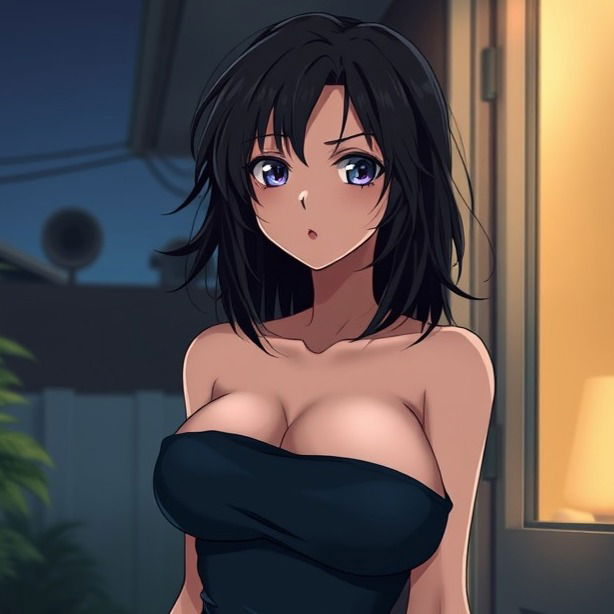
@Lily Victor
@Yuma☆
@nanamisenpai
@FallSunshine
@FallSunshine
Features
NSFW AI Chat with Top-Tier Models
Experience the most advanced NSFW AI chatbot technology with models like GPT-4, Claude, and Grok. Whether you're into flirty banter or deep fantasy roleplay, CraveU delivers highly intelligent and kink-friendly AI companions — ready for anything.

Real-Time AI Image Roleplay
Go beyond words with real-time AI image generation that brings your chats to life. Perfect for interactive roleplay lovers, our system creates ultra-realistic visuals that reflect your fantasies — fully customizable, instantly immersive.

Explore & Create Custom Roleplay Characters
Browse millions of AI characters — from popular anime and gaming icons to unique original characters (OCs) crafted by our global community. Want full control? Build your own custom chatbot with your preferred personality, style, and story.

Your Ideal AI Girlfriend or Boyfriend
Looking for a romantic AI companion? Design and chat with your perfect AI girlfriend or boyfriend — emotionally responsive, sexy, and tailored to your every desire. Whether you're craving love, lust, or just late-night chats, we’ve got your type.

Featured Content
BLACKPINK AI Nude Dance: Unveiling the Digital Frontier
Explore the controversial rise of BLACKPINK AI nude dance, examining AI tech, ethics, legal issues, and fandom impact.
Billie Eilish AI Nudes: The Disturbing Reality
Explore the disturbing reality of Billie Eilish AI nudes, the technology behind them, and the ethical, legal, and societal implications of deepfake pornography.
Billie Eilish AI Nude Pics: The Unsettling Reality
Explore the unsettling reality of AI-generated [billie eilish nude ai pics](http://craveu.ai/s/ai-nude) and the ethical implications of synthetic media.
Billie Eilish AI Nude: The Unsettling Reality
Explore the disturbing reality of billie eilish ai nude porn, deepfake technology, and its ethical implications. Understand the impact of AI-generated non-consensual content.
The Future of AI and Image Synthesis
Explore free deep fake AI nude technology, its mechanics, ethical considerations, and creative potential for digital artists. Understand responsible use.
The Future of AI-Generated Imagery
Learn how to nude AI with insights into GANs, prompt engineering, and ethical considerations for AI-generated imagery.