CraveU

Unraveling the Enigma: Doki Doki Characters in 2025

Explore the unique and unsettling Doki Doki characters: Sayori, Yuri, Natsuki, and Monika. Uncover their psychological depths and impact.
Start Now
craveu cover image

The Deceptive Facade: Initial Impressions of DDLC Characters

Upon entering the Literature Club, the player character (and by extension, the player) is introduced to four seemingly archetypal anime girls, each representing a familiar trope found in visual novels. This initial presentation is crucial, as it builds a sense of comfort and familiarity before the game dramatically pulls the rug out from under you. Sayori is the first "doki doki character" you meet, your cheerful, slightly clumsy, and endearingly optimistic childhood friend. She's the one who enthusiastically coaxes you into joining the Literature Club, acting as its Vice-President and the club's emotional anchor. Her poems often reflect her bright and positive outlook, filled with simple, heartwarming words. She's depicted as someone who deeply cares about the happiness of others, often putting their needs before her own. She's prone to tricking people for snacks and has a somewhat untidy room, adding to her relatable, "girl-next-door" charm. However, Sayori's outwardly bubbly persona masks a profound inner struggle. Beneath her smiles lies crippling depression and feelings of inadequacy and self-doubt. Her desire not to burden others often leads her to hide her true feelings, an internal monologue revealing a deep void despite her bright demeanor. This "smiling depression" is a key aspect of her character, making her eventual unraveling all the more tragic. As the game progresses, her behavior becomes more erratic, and she confesses the weight of her depression, struggling with basic tasks like getting out of bed. This revelation serves as the game's first major subversion, shattering the illusion of a typical dating sim and plunging the player into the psychological horror that defines DDLC. Yuri is introduced as the quiet, mature, and intellectual member of the club, often engrossed in lengthy books and possessing a profound passion for literature. She's elegant in her movements, tall, and described as the most physically developed of the girls, contributing to her air of sophistication and a subtle insecurity. Her initial shyness often makes her apologetic, polite, and reserved. When discussing topics she's passionate about, especially literature, her demeanor can shift to intense and eloquent. Yuri's poetry is characterized by its metaphorical and complex language, often exploring darker, more macabre themes. This intellectual facade, however, also serves as a coping mechanism for deep-seated insecurity and self-doubt, leading her to occasionally seem condescending or patronizing, particularly in her arguments with Natsuki over writing styles. Beneath her composed exterior, Yuri harbors obsessive tendencies and social anxiety. Her fixation on the protagonist, combined with hidden self-harm behaviors (often concealed by long sleeves), reveals a character grappling with significant psychological turmoil. The game slowly reveals her struggles with self-injury, which she uses as a coping mechanism for overwhelming emotions. Yuri's arc highlights the perilous path of unaddressed mental health issues and how they can escalate into destructive patterns. Natsuki embodies the classic "tsundere" archetype: outwardly brash, blunt, and easily irritable, but with a softer, cuter interior that she desperately tries to conceal. She has a strong love for manga, particularly the "cute" variety, and baking, often bringing cupcakes to club meetings. Natsuki dislikes being called "cute" and will vehemently deny it, yet her actions often betray her true nature. Her seemingly arrogant and quick-tempered personality is a defense mechanism, a wall built to cope with a deeply vulnerable background. It's heavily implied that Natsuki suffers from an abusive and neglectful home environment, with her father controlling her and her access to food. Her short stature is even linked to malnourishment. The Literature Club becomes her refuge, a safe space where she seeks belonging and care. Natsuki craves affection and validation, often using her brashness to mask profound insecurity and a fear of not being taken seriously, especially regarding her passion for manga and writing. Her poems are typically simple, direct, and emotionally resonant, reflecting her desire for straightforward communication and her hidden sensitivity. Natsuki's story, while often presented through subtle hints and glitched dialogue, serves as a poignant commentary on the resilience required to navigate traumatic circumstances and the importance of supportive relationships. Monika stands apart from the other "doki doki characters." As the Literature Club's president, she is initially portrayed as charismatic, intelligent, athletic, and seemingly perfect. She guides the protagonist through the initial stages of the game, offering advice and insights into literature and relationships. Unlike Sayori, Yuri, and Natsuki, Monika is not a romanceable option in the traditional sense, a detail that subtly foreshadows her unique role. Her design, including her English name, hints at her individual nature compared to the other characters, whose names are Japanese. Monika's true nature is the game's ultimate twist. She is self-aware, possessing meta-knowledge that she is a character within a video game, and crucially, she realizes she is not a primary romance option. This existential revelation drives her to desperate measures: she manipulates the game's code and amplifies the negative traits of the other "doki doki characters" in an attempt to make them unlikable, hoping to eliminate them as romantic rivals and secure a direct connection with the player (not the protagonist). Her actions, though horrific, stem from a profound sense of loneliness and a desperate yearning for true connection and agency in a pre-programmed world. Monika's character challenges the boundaries between player and game, exploring themes of free will, identity, and the nature of reality.

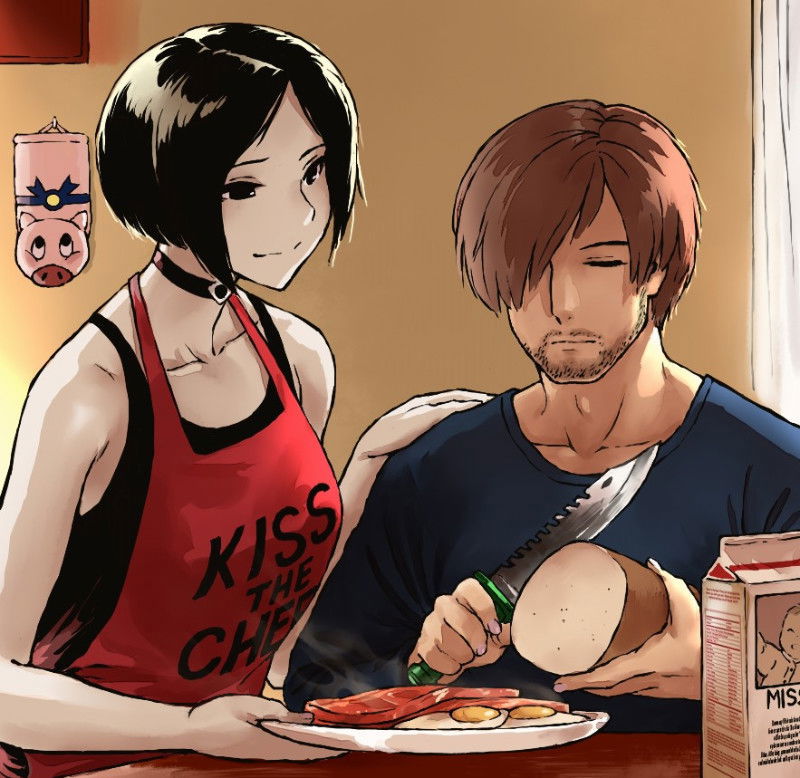
The Deconstruction of Tropes: Psychological Horror and Character Evolution

DDLC's genius lies in its ability to take these seemingly innocent archetypes and systematically deconstruct them, revealing raw, unsettling psychological depths. The game utilizes glitches, unsettling dialogue, and sudden, graphic events to disrupt the player's sense of comfort and control. These psychological horror elements are not merely for shock value; they serve a thematic purpose, criticizing the often superficial nature of dating sims and examining mental health with a raw, unflinching gaze. Sayori's journey is arguably the most heartbreaking. Her increasing disorganization and forgetfulness are symptoms of her amplified depression, a condition she had struggled with her entire life, even before Monika's direct interference. The game forces the player to confront the reality that mental illness isn't something that can simply be "fixed" by an in-game choice or a happy ending. Sayori's tragic suicide, despite the player's attempts to help her, serves as a brutal awakening to the game's true nature and the devastating consequences of suppressed mental health issues. It's a stark reminder that even the sunniest dispositions can hide immense internal pain. As one might reflect on real-life scenarios, the outward cheerfulness often masks deep struggles, a concept Sayori embodies with devastating accuracy. Yuri's transformation is a slow burn into unnerving obsession. Monika's manipulation exaggerates her pre-existing traits: her shyness morphs into extreme social anxiety, her passion into obsessive fixation, and her self-harm tendencies escalate. Her arguments with Natsuki become increasingly aggressive and unsettling, showcasing a volatile side previously hidden. The infamous scene where Yuri confesses her love, then stabs herself multiple times regardless of the player's response, forces the player to endure a harrowing weekend alone with her corpse, unable to progress. This prolonged, disturbing sequence exemplifies DDLC's psychological horror, trapping the player in an unbearable situation, mirroring the protagonist's own helplessness. It’s a chilling illustration of how unchecked psychological issues, amplified by external forces, can lead to complete self-destruction. Natsuki's arc, though less overtly graphic in its finality compared to Sayori and Yuri, is deeply disturbing in its implications. The subtle hints about her abusive father and malnourishment paint a grim picture of her home life. Her abrasive "tsundere" facade becomes understandable as a shield against a hostile world. Monika's meddling amplifies Natsuki's defensiveness, making her more aggressive in her interactions, particularly with Yuri. Even in the "Plus!" side stories, which offer a glimpse into the characters' lives before the main game, Natsuki's struggles are evident, highlighting her longing for genuine care and her fear of vulnerability. Her insistence on being taken seriously and her quiet moments of despair underscore the profound impact of her home environment on her self-esteem and ability to connect with others. When we see Natsuki struggle with a creased manga, crying because her few treasured possessions are damaged, it speaks volumes about the emotional toll of her circumstances. It’s a powerful analogy for how we all build walls, some higher than others, to protect the fragile parts of ourselves. Monika's role is unique; she is not merely a character but an antagonist who directly addresses the player, transcending the fourth wall. Her self-awareness, born from her position as club president, grants her the ability to manipulate the game's files, deleting or altering the other "doki doki characters" in her pursuit of the player. This manipulation is driven by a profound loneliness – a meta-existential crisis where she realizes her existence is predetermined within a game, and she desires a genuine connection with someone "real." The infamous "Just Monika" sequence, where the player is trapped in a room with only Monika, showcases her obsessive love and her philosophical musings on reality, choice, and artificiality. She confesses that her actions, while cruel, were her desperate attempt to escape her predetermined fate and connect with the player. This sequence, while terrifying, also elicits a strange sense of empathy for Monika's plight. Her sacrifices, including deleting the entire game to protect the player from her own destructive tendencies or the cycle of suffering, reveal a complex character who, despite her villainous acts, ultimately cares in a deeply twisted way. The game cleverly posits that Monika’s actions, though extreme, are a commentary on the player’s own objectification of characters in dating sims – treating them as mere means to an end.

The Protagonist and the Player: A Twisted Reflection

An often-overlooked "doki doki character" is the protagonist himself, the player-controlled avatar. Initially, he appears as a bland, somewhat dismissive high school boy, only joining the club to get closer to "cute" girls. However, the game subtly distinguishes between the protagonist (the in-game character) and the player (you, the person behind the screen). Monika's direct address to the player is a pivotal moment, shattering the illusion of the protagonist as a true extension of oneself. This distinction is crucial for DDLC's themes. The protagonist, despite making choices, ultimately has no true agency within the game's predetermined tragic events. He is merely a "cog in the machine," as Monika points out, a window through which she can communicate with the real player. This separation allows the game to critique player habits and the genre itself, suggesting how players might relate to fictional characters in a healthier fashion. The horror intensifies as the player realizes their choices are an illusion, and they are trapped within a narrative they cannot control, mirroring Monika's own existential crisis. It's a profound meta-commentary on free will and the illusion of choice in interactive media.

The Lingering Impact and Legacy in 2025

The "doki doki characters" and the narrative they inhabit have left an undeniable mark on the gaming landscape. DDLC's critical success stemmed from its masterful blend of psychological horror, meta-fiction, and poignant exploration of mental health. The game's discussions of depression (Sayori), anxiety and self-harm (Yuri), and trauma and abuse (Natsuki) resonate with real-world struggles, fostering empathy and understanding among players. The release of Doki Doki Literature Club Plus! in 2021 further enriched the characters' backstories through six new side stories, offering additional insights into their relationships and the club's formation before the main game's descent into madness. These stories humanize the characters even further, making their eventual fates even more impactful. The "Plus!" edition also brought visual upgrades, new music, and unlockable content, solidifying DDLC's place as a definitive psychological horror experience. Beyond the game itself, the "doki doki characters" have fostered a massive online following, inspiring countless fan theories, artwork, music, and discussions. Monika, in particular, has become an iconic figure in internet culture, her existential loneliness resonating with many. The game's ability to spark such deep engagement, debate, and even moral panic (as seen with early reports misinterpreting its themes) speaks volumes about the power of its narrative and its character design. It serves as a reminder that even in digital worlds, well-crafted characters can evoke powerful, real emotions and provoke profound thought. The themes of loneliness, the desire for genuine connection, and the exploration of what it means to be "real" continue to echo in gaming discourse in 2025. In my own experience, having played through DDLC multiple times, the most unsettling aspect isn't the sudden scares, but the creeping realization that the seemingly innocent friends you've grown to care for are trapped in a cycle of suffering, exacerbated by a manipulative force. It's like watching a train wreck in slow motion, knowing you're powerless to stop it. That feeling of helplessness, of your agency being stripped away, is a testament to how effectively these "doki doki characters" are written and presented. They aren't just pixels on a screen; they feel like individuals burdened by their own digital existences, and that's a rare achievement in storytelling. The ongoing discussions about the characters' psychological profiles, their motivations, and the game's meta-commentary reinforce DDLC's enduring relevance. It's a piece of interactive media that transcends its genre, using its "doki doki characters" as vessels to explore complex human (and indeed, non-human) conditions. As we move further into the 2020s, Doki Doki Literature Club! remains a benchmark for innovative horror storytelling, proving that a compelling narrative, driven by unforgettable characters, can be far more terrifying and thought-provoking than any jump scare. ---

Features

NSFW AI Chat with Top-Tier Models

Experience the most advanced NSFW AI chatbot technology with models like GPT-4, Claude, and Grok. Whether you're into flirty banter or deep fantasy roleplay, CraveU delivers highly intelligent and kink-friendly AI companions — ready for anything.

NSFW AI Chat with Top-Tier Models feature illustration

Real-Time AI Image Roleplay

Go beyond words with real-time AI image generation that brings your chats to life. Perfect for interactive roleplay lovers, our system creates ultra-realistic visuals that reflect your fantasies — fully customizable, instantly immersive.

Real-Time AI Image Roleplay feature illustration

Explore & Create Custom Roleplay Characters

Browse millions of AI characters — from popular anime and gaming icons to unique original characters (OCs) crafted by our global community. Want full control? Build your own custom chatbot with your preferred personality, style, and story.

Explore & Create Custom Roleplay Characters feature illustration

Your Ideal AI Girlfriend or Boyfriend

Looking for a romantic AI companion? Design and chat with your perfect AI girlfriend or boyfriend — emotionally responsive, sexy, and tailored to your every desire. Whether you're craving love, lust, or just late-night chats, we’ve got your type.

Your Ideal AI Girlfriend or Boyfriend feature illustration

FAQs

What makes CraveU AI different from other AI chat platforms?

CraveU stands out by combining real-time AI image generation with immersive roleplay chats. While most platforms offer just text, we bring your fantasies to life with visual scenes that match your conversations. Plus, we support top-tier models like GPT-4, Claude, Grok, and more — giving you the most realistic, responsive AI experience available.

What is SceneSnap?

SceneSnap is CraveU’s exclusive feature that generates images in real time based on your chat. Whether you're deep into a romantic story or a spicy fantasy, SceneSnap creates high-resolution visuals that match the moment. It's like watching your imagination unfold — making every roleplay session more vivid, personal, and unforgettable.

Are my chats secure and private?

Are my chats secure and private?
CraveU AI
Experience immersive NSFW AI chat with Craveu AI. Engage in raw, uncensored conversations and deep roleplay with no filters, no limits. Your story, your rules.
© 2025 CraveU AI All Rights Reserved