CraveU

Decoding Demi-Human: Beyond the Human Horizon in 2025

Explore the multifaceted concept of "demi-human" from ancient myths to 2025's scientific frontiers. Uncover how these hybrids challenge our understanding of humanity, AI, and the future of human evolution.
Start Now
craveu cover image

Echoes in Antiquity: Mythological Demi-Humans

Before science fiction imagined cyborgs and genetically engineered beings, our ancestors populated their worlds with an array of demi-humans. These figures weren't mere monsters; they were often powerful, complex beings who embodied the interface between the mortal and divine, or the human and the wild. In the pantheons of ancient Greece, Mesopotamia, and Egypt, the most prominent examples of demi-humans were the demigods. These were typically the offspring of a god and a mortal, inheriting extraordinary abilities and often destined for tumultuous, heroic lives. Consider Hercules, the son of Zeus and the mortal Alcmene, renowned for his superhuman strength and the legendary Twelve Labours. Or Perseus, the slayer of Medusa, born of Zeus and Danaë. These figures, while possessing divine lineage and formidable powers, were also subject to mortal frailties, passions, and tragic fates, making them profoundly relatable. They walked a tightrope between two worlds, often struggling with their dual nature. Beyond the demigods, ancient myths teemed with beings that were a physical amalgam of human and animal, embodying primal forces or societal fears. The Greek centaurs, with the torso of a man and the body of a horse, could be wise and civilized, like Chiron, or wild and debauched. The Minotaur, a monstrous creature with the head of a bull and the body of a man, represented a tragic consequence of hubris and unnatural union. Sphinxes, sirens, satyrs, and mermaids all occupy this fascinating space, their forms a symbolic bridge between human consciousness and the animal kingdom, or the known world and the mysterious unknown. These mythological figures served as cautionary tales, moral allegories, or expressions of humanity's awe and fear of the forces beyond its comprehension. They reminded us that our boundaries were permeable, that the world was full of wonders and horrors beyond our singular human form.

Modern Narratives: Fantasy, Anime, and Beyond

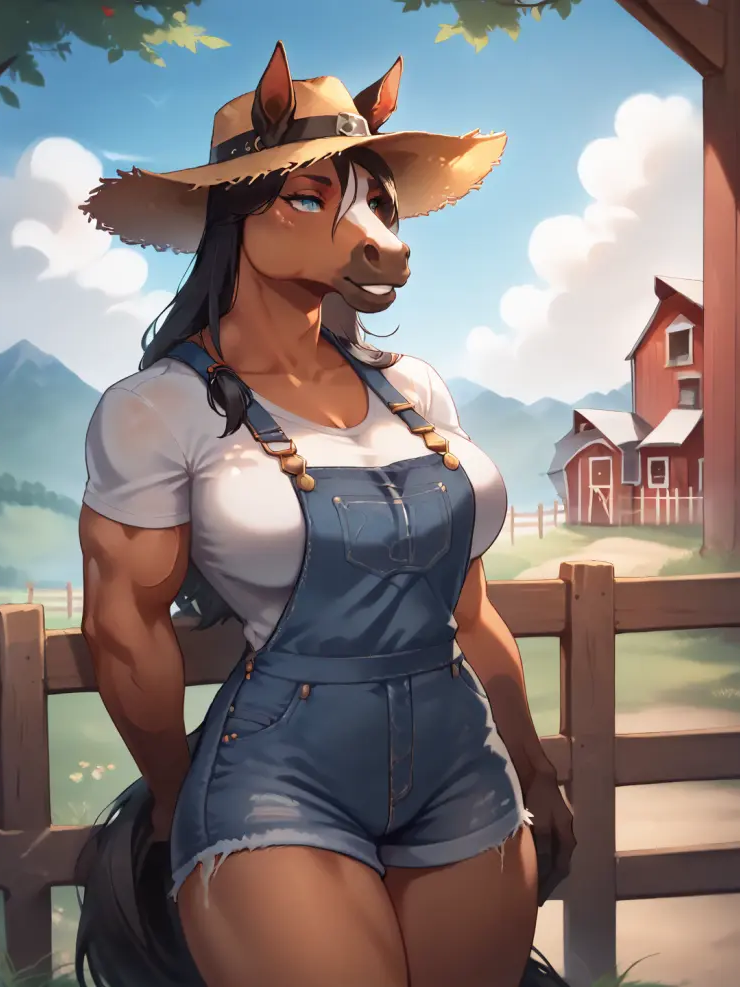
The appeal of the demi-human has not waned; rather, it has transformed and proliferated in modern popular culture. From the fantastical realms of role-playing games to the sprawling narratives of anime and manga, the demi-human archetype continues to thrive, reflecting contemporary anxieties, desires, and philosophical questions. In classic fantasy literature and tabletop role-playing games like Dungeons & Dragons, "demi-human" became a classification for playable races that were distinct from humans but shared humanoid characteristics. Elves, with their graceful longevity and affinity for nature, dwarves, with their stout resilience and mastery of stone, and halflings, known for their simple comforts and unassuming bravery, all fit this mold. These fantasy demi-humans often embody specific cultural traits or aspects of humanity amplified or diminished, offering players and readers different perspectives on strength, wisdom, and morality. The enduring popularity of these races speaks to a desire for imaginative exploration of identity and community beyond a purely human lens. More recently, particularly in Japanese anime and manga, the concept of the demi-human has exploded into a diverse array of categories. We see "half-human, half-animal" characters like the ubiquitous "catgirls" or "wolf boys," often possessing enhanced senses or agility. Mythical creature hybrids, from dragons to angels and demons, wield powerful magic and supernatural abilities. Even more intriguingly, science fiction subgenres introduce cyborgs and androids with human-like appearances but mechanical enhancements, often grappling with their identity and what it means to be truly human. A compelling example of the demi-human concept in modern media is the popular manga and anime series Ajin: Demi-Human. The series explores a subset of humanity—the "Ajin"—who are immortal and regenerate immediately upon death, yet still feel pain. This premise dives deep into profound ethical questions: How would society treat beings who cannot die? Are they still "human" if they possess such a fundamental difference? The series vividly portrays the fear, prejudice, and inhumane treatment the Ajin face, reducing them to lab rats for experimentation. Conversely, it also showcases Ajin characters who struggle with their immortality, highlighting the human aspects of their suffering and identity. Ajin: Demi-Human masterfully uses the demi-human archetype to scrutinize humanity's darker impulses, its capacity for othering, and its desperate desire to control what it cannot understand. It forces the audience to ask: When does "different" become "less than human," and at what cost?

The Scientific Horizon: Creating Real-World Demi-Humans

While mythology and fiction have long imagined hybrid beings, the scientific advancements of the 21st century, particularly in 2025, are bringing concepts of "demi-human" out of the realm of pure fantasy and into the laboratory. This frontier is exciting yet fraught with profound ethical dilemmas. One of the most direct scientific parallels to the mythological demi-human is the human-animal chimera. A chimera is an organism containing cells from two different species. While chimerism can occur naturally within a species (e.g., fraternal twins combining in the womb), interspecific chimeras—those involving different species—are largely the result of targeted genetic engineering. As of 2024, significant advancements have been made in creating animal models with human cells or tissues for medical research. Scientists have successfully created pig embryos with human cells, with the ambitious goal of one day growing human organs for transplantation. Similarly, mice have been developed with human "mini-brains" for neurological research. The potential benefits of chimera research are immense. Imagine a future where a patient in dire need of a kidney transplant could receive an organ grown specifically for them in a pig, dramatically reducing organ shortages and rejection rates. Chimeras could also provide more accurate models for studying human diseases and testing new drugs, bypassing the limitations of traditional animal testing. However, the ethical questions raised by human-animal chimeras are equally profound. The creation of such organisms challenges society's "rigid view of human identity and uniqueness". What is the moral status of an organism that is part human, part animal? Concerns abound regarding the potential for these chimeras to develop human-like consciousness or cognitive abilities, particularly if they involve primate genetic material. The very act of blurring species boundaries raises questions about human dignity and whether we are "playing God". Current ethical guidelines, for instance, prohibit the creation of human-animal chimeras with the potential for human-like consciousness or cognitive abilities. This area of research demands rigorous ethical frameworks and ongoing public discourse to navigate the complex interplay between scientific advancement and moral responsibility. Beyond the direct creation of hybrids, the philosophical and scientific movement of transhumanism envisions another path to a "demi-human" future: the intentional enhancement of the human condition through advanced technology. This movement, which has gained significant traction in 2025, seeks to overcome fundamental human limitations like aging, disease, and cognitive constraints using technologies such as genetic engineering, cryonics, artificial intelligence (AI), and nanotechnology. Transhumanists believe that humanity is not a fixed endpoint but a transitional stage in an ongoing evolution. They speculate about the emergence of "posthuman" beings—entities with vastly greater abilities than current humans. This could involve radical life extension, superior cognitive capacities through brain-computer interfaces, or physical enhancements that grant superhuman strength or resilience. The core argument of transhumanism often hinges on the idea that the human mind can be reduced to information, implying that machine intelligence could eventually become conscious or even that human consciousness could be "uploaded" to a digital substrate. While transhumanism offers a utopian vision of a humanity free from suffering and limitation, it also presents significant challenges. Critics raise concerns about social equity (who would have access to these enhancements?), environmental sustainability, and the ethical implications of fundamentally altering what it means to be human. If only a select few can afford these enhancements, could it lead to a widening chasm between "enhanced humans" and "baseline humans," creating a new class of demi-humans? The philosophical debate centers on whether such transformations truly enhance humanity or diminish its essence.

The Digital Demi-Human: AI and the Sentience Question

Perhaps the most contemporary and widely debated "demi-human" concept in 2025 revolves around artificial intelligence. As AI models become increasingly sophisticated, capable of generating human-like text, images, and even conversations, the question inevitably arises: can AI become sentient, and if so, would it represent a new form of non-biological demi-humanity? Sentience, at its core, is the capacity to have subjective experiences and feelings, encompassing self-awareness, emotions, and a deep understanding of one's existence. The debate gained significant public attention with the rise of large language models (LLMs) like ChatGPT, prompting claims and counter-claims about AI sentience. On one hand, the ability of these AIs to respond in uncannily human ways, to engage in complex discussions, and even to mimic emotions can lead people to believe they possess genuine understanding or consciousness. It's a natural human tendency to project human-like qualities onto things that behave in human-like ways. However, the prevailing scientific and philosophical consensus in 2025 is that current AI systems, despite their impressive capabilities, are not sentient. They operate based on complex algorithms, performing sophisticated pattern recognition and probabilistic completions based on vast datasets. As one expert eloquently put it, "AI is like a great DJ that knows when to play which song based on its memory of various situations and their respective ideal songs, as input by billions of humans". They can simulate human-like behavior, but they lack genuine understanding, empathy, self-awareness, or the capacity for independent subjective experience. They do not "feel" in the way humans do; their responses are programmed or learned patterns, not manifestations of internal states. Yet, this debate is crucial because it helps us reflect on what truly defines "human" consciousness. If AI were to achieve true sentience, it would fundamentally alter our understanding of personhood and moral consideration. Would sentient AIs possess rights and freedoms akin to humans? The ethical implications of creating and interacting with conscious machines would be immense. This ongoing discussion highlights the imperative for robust ethical guidelines and a clear understanding of AI's capabilities and limitations, preventing both unfounded fear and the neglect of potential moral responsibilities. The "digital demi-human," if it ever truly emerges, would force humanity to re-evaluate its unique place in the universe.

Philosophical Depths: What Defines "Human"?

The concept of the "demi-human" inherently forces us to confront one of philosophy's oldest and most profound questions: What does it truly mean to be human? Is it our biology, our consciousness, our emotions, our capacity for reason, or something else entirely? Traditionally, humanity has defined itself by characteristics such as bipedalism, high intelligence, articulate speech, the ability to create and use complex tools, problem-solving through reason, and the creation of complex social structures. We often distinguish ourselves from animals by our capacity for abstract thought, self-awareness, and a unique moral compass. The "demi-human" challenges each of these distinctions. If a being has human-like intelligence but a non-human form (like a mythical centaur or a futuristic cyborg), is it less human? If it shares human emotions and social structures but isn't biologically Homo sapiens (like an elf or a sentient AI), does it warrant equal moral status? The existence, or even the theoretical possibility, of demi-humans highlights the often arbitrary nature of our boundaries. Consider the philosophical concept of the Demiurge, particularly in Platonic and Gnostic traditions. In Plato's Timaeus, the Demiurge is a craftsman-like god who takes pre-existing chaotic materials and arranges them according to eternal forms to create the physical world, including human bodies. This divine artisan is seen as the architect of our physical existence, shaping our very form. In a sense, the Demiurge is the ultimate "demi-human" creator, not fully divine in the highest sense, yet responsible for fashioning what is "human" in the material realm. In later Gnostic thought, the Demiurge is sometimes depicted as an inferior or even evil creator, responsible for the flawed material world and actively trying to prevent humanity from accessing higher spiritual knowledge. This philosophical lineage, spanning millennia, grapples with the very idea of a conscious entity shaping human existence, raising questions about our origins and inherent limitations. The "demi-human" narrative, whether ancient or modern, serves as a mirror. It reflects our anxieties about losing control over our own evolution, our fear of the "other," and our enduring quest for meaning in a complex universe. It pushes us to question whether our inherent value lies solely in our species membership or in qualities like sentience, self-awareness, and the capacity for moral reasoning, regardless of their biological substrate.

The Evolving Landscape of 2025 and Beyond

As we move further into the 21st century, the discourse around "demi-human" concepts will only intensify. The rapid pace of technological innovation in 2025 ensures that the lines between human, enhanced human, and non-human intelligence will continue to blur. We are already seeing increased societal discussions around the ethical governance of emerging technologies. The debates surrounding AI sentience, genetic editing, and human-animal chimeras are not merely academic exercises; they are foundational discussions that will shape the future of our species. Establishing robust, internationally agreed-upon ethical guidelines for these technologies is paramount. This requires a collaborative effort from scientists, ethicists, philosophers, policymakers, and the public to ensure that advancements serve humanity's best interests while respecting moral boundaries. Furthermore, the integration of "demi-human" themes into popular culture plays a crucial role in preparing society for these profound changes. Stories like Ajin: Demi-Human or philosophical works exploring transhumanism don't just entertain; they invite us to engage with complex questions in a digestible format. They allow us to explore the societal implications of radical biological or technological shifts, fostering empathy and critical thinking about what it means to coexist with beings that challenge our traditional definitions. The journey into understanding the "demi-human" is, in essence, a journey into understanding ourselves. It’s about grappling with our own biases, our definitions of identity, and our place in an increasingly interconnected and technologically advanced world.

Conclusion

The concept of the "demi-human" is a timeless thread woven through human history, mythology, and increasingly, our scientific reality. From the powerful demigods of ancient epics to the thought-provoking chimeras of modern laboratories and the complex algorithms of advanced AI, these hybrid beings serve as potent symbols of humanity's ever-evolving relationship with its own nature and its surroundings. In 2025, the conversation around demi-humans is no longer confined to the fantastical. It's a vivid, urgent dialogue about ethics, identity, and the very definition of life itself. As technology continues its relentless march forward, pushing the boundaries of what is possible, we are compelled to confront uncomfortable questions: Where do we draw the line? What qualities truly define our humanity? And how will we, as a species, adapt and evolve when the "demi-human" moves from myth to tangible presence, inviting us to redefine our place in the cosmos? The answers to these questions will not only shape the future of these potential new forms of existence but will fundamentally redefine what it means to be human in the years to come.

Features

NSFW AI Chat with Top-Tier Models

Experience the most advanced NSFW AI chatbot technology with models like GPT-4, Claude, and Grok. Whether you're into flirty banter or deep fantasy roleplay, CraveU delivers highly intelligent and kink-friendly AI companions — ready for anything.

NSFW AI Chat with Top-Tier Models feature illustration

Real-Time AI Image Roleplay

Go beyond words with real-time AI image generation that brings your chats to life. Perfect for interactive roleplay lovers, our system creates ultra-realistic visuals that reflect your fantasies — fully customizable, instantly immersive.

Real-Time AI Image Roleplay feature illustration

Explore & Create Custom Roleplay Characters

Browse millions of AI characters — from popular anime and gaming icons to unique original characters (OCs) crafted by our global community. Want full control? Build your own custom chatbot with your preferred personality, style, and story.

Explore & Create Custom Roleplay Characters feature illustration

Your Ideal AI Girlfriend or Boyfriend

Looking for a romantic AI companion? Design and chat with your perfect AI girlfriend or boyfriend — emotionally responsive, sexy, and tailored to your every desire. Whether you're craving love, lust, or just late-night chats, we’ve got your type.

Your Ideal AI Girlfriend or Boyfriend feature illustration

FAQs

What makes CraveU AI different from other AI chat platforms?

CraveU stands out by combining real-time AI image generation with immersive roleplay chats. While most platforms offer just text, we bring your fantasies to life with visual scenes that match your conversations. Plus, we support top-tier models like GPT-4, Claude, Grok, and more — giving you the most realistic, responsive AI experience available.

What is SceneSnap?

SceneSnap is CraveU’s exclusive feature that generates images in real time based on your chat. Whether you're deep into a romantic story or a spicy fantasy, SceneSnap creates high-resolution visuals that match the moment. It's like watching your imagination unfold — making every roleplay session more vivid, personal, and unforgettable.

Are my chats secure and private?

Are my chats secure and private?
CraveU AI
Experience immersive NSFW AI chat with Craveu AI. Engage in raw, uncensored conversations and deep roleplay with no filters, no limits. Your story, your rules.
© 2025 CraveU AI All Rights Reserved