CraveU

Maki Harukawa: Unveiling the Ultimate Enigma

Explore the complex character of Danganronpa Maki, from her hidden talent as the Ultimate Assassin to her emotional growth and relationships.
Start Now
craveu cover image

The Enigmatic Ultimate Child Caregiver... Or Is She?

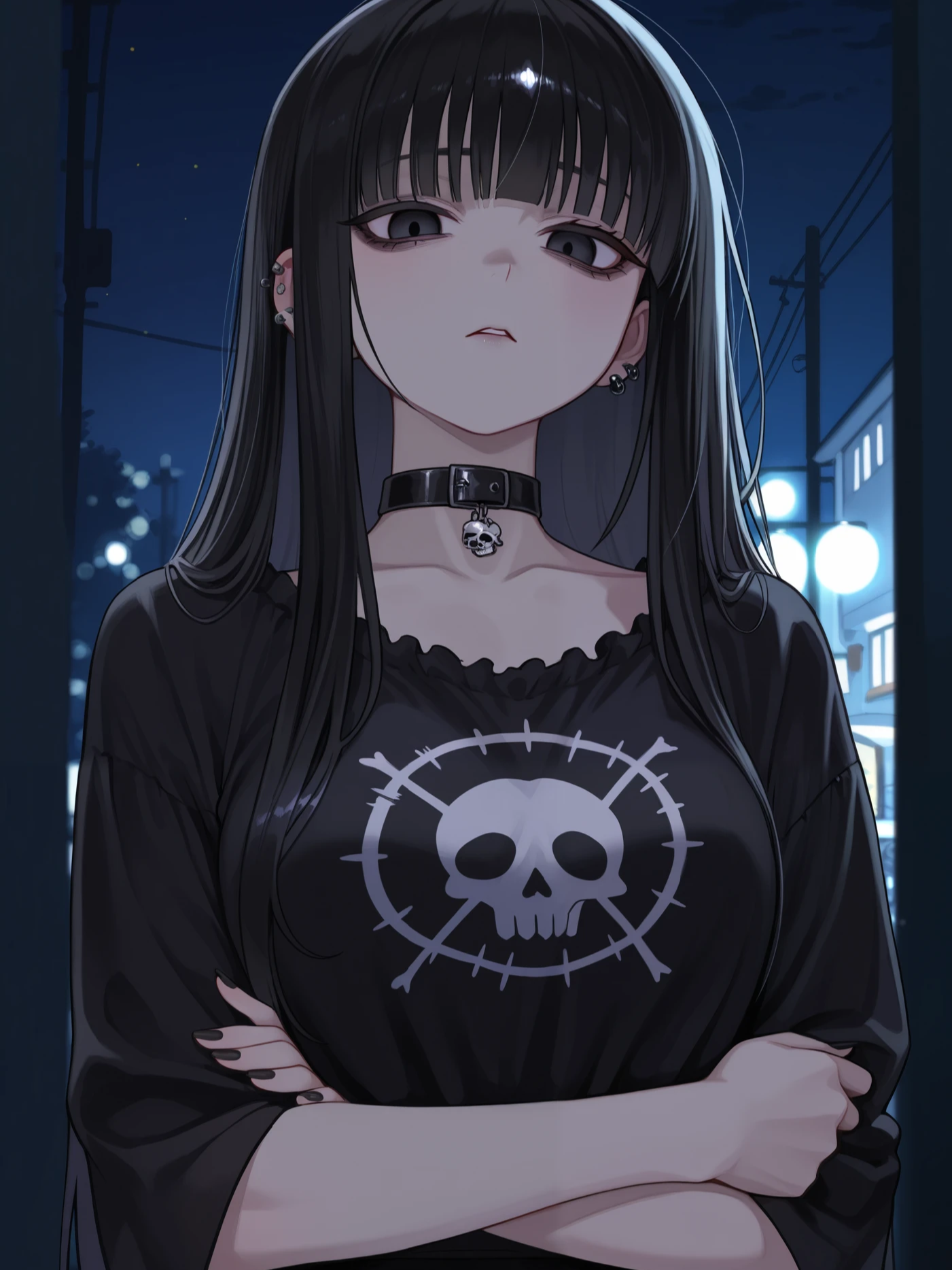
When players first encounter Maki Harukawa, her talent as the Ultimate Child Caregiver seems almost incongruous with her distant demeanor. She's often seen reading alone, rarely engaging in casual conversation, and her replies are typically blunt and serious. This initial presentation creates an immediate sense of mystery around her, hinting at a hidden depth that belies her seemingly innocent classification. As the killing game unfolds, the true nature of Maki's talent is dramatically unveiled, shifting perceptions and plunging the narrative into a new dimension of tension. The shocking revelation that Maki is, in fact, the Ultimate Assassin, is a pivotal moment in Danganronpa V3. This twist, masterfully orchestrated by the manipulative Kokichi Ouma, exposes a far darker and more dangerous side to her character. Her initial talent, while a facade, was not entirely without truth; she did develop genuine skills in childcare during her time in an orphanage, where she was compelled to help care for younger children due to absent parents. However, this genuine skill became a cover for a brutal reality. Her true profession as an assassin, trained by a shadowy organization called the Holy Salvation Society from the age of 10, paints a stark contrast to her gentle initial persona. This duality is central to understanding Maki. Her "Ultimate Child Caregiver" identity is a carefully constructed mask, a desperate attempt to appear normal and avoid the fear and judgment that her true talent would inevitably inspire. It's a poignant reflection of how she wishes to be perceived versus the harsh reality of her existence. The jarring reveal of her true talent forces both her fellow students and the players to re-evaluate everything they thought they knew about her, transforming her from a quiet background figure into one of the most compelling and potentially dangerous participants in the killing game.

Unraveling Maki's Past: A Burdened Soul

Maki's journey into the world of assassination was not one of choice but of grim necessity. Raised in an orphanage after being abandoned by her parents, she never knew a typical childhood. It was within this orphanage that she formed a close bond with another girl her age, a friendship she cherished as the happiest part of her life. This precious connection became the catalyst for her tragic fate. When the Holy Salvation Society, a group that believed training assassins was an act to appease God, came seeking a new recruit, they initially targeted her friend. However, Maki, recognizing her friend's inability to endure such a brutal lifestyle, bravely stepped forward and volunteered herself in her friend's place. This act of self-sacrifice, born from a desire to protect the one person she cared for deeply, set her on an excruciating path. Her training was undeniably brutal, designed to break her spirit and desensitize her to violence. She was subjected to torture and forced to endure immense physical and psychological pain, often becoming nauseous from the rigorous regimen. The aim was to mold her into an emotionless killing machine, to strip away her dignity and make her feel "empty." She learned to take lives indiscriminately, even those of people she knew, eventually reaching a point where she became "accustomed to it" and accepted her life as a killer. The psychological toll of this upbringing is immense. Maki carries the weight of countless lives on her conscience, and the constant exposure to death has left her jaded and cynical. She struggles with her identity, questioning if she is still human after being forced to abandon everything nonessential to her training. This deep-seated trauma explains her initial aloofness and her tendency to push others away; it's a defense mechanism, a way to prevent further emotional pain or the risk of exposing others to the dangers of her world. The revelation that her childhood friend, for whom she sacrificed so much, later died in a car accident while saving a child, only deepens her motivation to keep the orphanage running, a poignant tie to her past. Maki's backstory is not merely a plot device; it's the very foundation of her character, informing her guarded nature and the deep-seated desire for connection she unknowingly harbors.

A Heart Behind the Mask: Relationships and Growth

The isolated existence Maki built around herself begins to crumble within the confines of the Ultimate Academy for Gifted Juveniles, primarily through the unexpected and often challenging interactions she has with her fellow students. Her journey is a powerful exploration of how human connection can thaw even the coldest of exteriors. The most significant catalyst for Maki's emotional transformation is her evolving relationship with Kaito Momota, the Ultimate Astronaut, and Shuichi Saihara, the Ultimate Detective. This trio becomes the emotional core of Danganronpa V3's later chapters, a beacon of genuine connection in a world of deceit and despair. Kaito, with his unwavering optimism and relentless belief in others, is the first to truly challenge Maki's defensive walls. Despite her constant attempts to push him away, often with her signature, chilling question, "Do you want to die?", Kaito persists. He sees beyond her hardened exterior, recognizing the vulnerability and goodness within her. He consistently encourages her, invites her to train with him and Shuichi, and treats her not as an assassin to be feared, but as a friend to be supported. This relentless positivity and unconditional acceptance gradually chip away at Maki's cynicism. It's Kaito who gives her the endearing nickname "Harumaki" (or "Maki Roll" in the English version), a playful gesture that subtly reinforces their growing bond. The bond between Danganronpa Maki and Kaito becomes a central emotional arc, leading to Maki developing a deep, albeit initially unconfessed, affection for him. Her confession to him, even amidst the fabricated truths of the ending, highlights the genuine nature of her feelings, proving that love can blossom even in the most despair-ridden environments. Shuichi Saihara, while more reserved than Kaito, also plays a crucial role in Maki's development. As the game's protagonist, Shuichi is often the recipient of Maki's more candid moments. She finds herself able to discuss personal details, including aspects of her past and her true talent, with him, sometimes even before she fully trusts Kaito. Shuichi, too, harbors his own insecurities and a past he struggles with, creating a subtle parallel that allows for a unique understanding between them. Their shared investigations and reliance on each other during trials further solidify their bond. While her romantic feelings lean towards Kaito, her connection with Shuichi is one of deep trust and mutual support, acting as a crucial emotional anchor, especially after Kaito's eventual death. She genuinely wants him to be the best detective he can be, reflecting her underlying care for him. While the core trio is paramount, Maki's interactions with other characters, though fewer, also illuminate aspects of her personality. Her initial coldness is evident in how she tells others to forget her presence after her assassin talent is revealed, and her general reluctance to engage in casual conversation. However, glimpses of a softer side appear. For instance, despite her stated dislike for children, she is capable of genuinely caring for them, a skill honed in the orphanage. There are also moments where her protective instincts, honed by her assassin training, extend to others in the group, demonstrating a gradual expansion of her circle of concern beyond just her closest allies. Even her often confrontational dynamic with Kokichi Ouma, while antagonistic, pushes her to confront her own emotions and biases, particularly her desire for revenge when she believes he is responsible for Kaito's demise.

Maki's Role in the Killing Game: Key Moments and Contributions

Beyond her personal journey, Danganronpa Maki is an active and influential participant in the killing game itself. Her unique skillset and changing perspective significantly impact the course of events, particularly during investigations and class trials. Initially, her presence is a source of apprehension. Her hidden talent as the Ultimate Assassin makes her an immediate suspect and a figure of fear for many of her classmates. When her research lab opens, revealing her tools of the trade, it only amplifies the distrust. For a time, she even guards her lab to prevent others from discovering her secret. This initial fear means she often distances herself, anticipating negative reactions. However, as she begins to open up, Maki's capabilities prove invaluable. Her training in combat, stealth, and survival skills, combined with her strategic mindset and quick decision-making, make her a formidable asset. While she refrains from using her assassination skills to directly murder during the game (except in specific, complex circumstances related to the plot's twists), her knowledge of weapons and human physiology often provides critical insights during investigations. She might point out inconsistencies in how a body was handled or how a weapon was used, leveraging her expertise in lethal methods to assist Shuichi's deductions. Perhaps her most impactful, and controversial, contribution comes in Chapter 5. Believing Kokichi Ouma to be the mastermind and responsible for Kaito's perceived death, Maki attempts to kill him. This act, fueled by grief and a desperate desire for revenge, nearly leads to a catastrophic outcome for the entire group, as she is willing to sacrifice everyone to eliminate who she believes is the mastermind. This impulsive act, while dangerous, is a testament to her profound loyalty and love for Kaito, demonstrating how deeply her emotional barriers have shattered. It's a moment that highlights the dangerous intersection of her assassin instincts and her newly awakened capacity for intense emotion. Despite the danger she poses, the others, particularly Shuichi, rally to understand the truth and prevent further tragedy, showcasing the bonds forged despite the deadly circumstances. In the final trial, as one of the surviving characters, Maki's newfound emotional strength and conviction are evident. She stands alongside Shuichi and Himiko, confronting the truth about the killing game and its fictional nature. Her decision to vote against the continuation of Danganronpa, influenced by Shuichi's arguments and her own desire to escape, showcases her evolution from a cold, desensitized killer to a person who fights for a future beyond despair.

The Evolution of a Character: From Coldness to Compassion

The narrative arc of Danganronpa Maki is arguably one of the most compelling and transformative in the entire series. She begins as a character defined by isolation and a painful past, her identity seemingly consumed by her lethal talent. Her demeanor is consistently aloof, blunt, and serious, initially making her difficult for both characters and players to approach. She actively tries to distance herself from others, fearing that revealing her true self would only lead to their fear and attempts to kill her. However, the persistent efforts of Kaito Momota and the quiet understanding of Shuichi Saihara initiate a slow but profound thawing of her hardened exterior. Kaito's unwavering belief in her, his insistent calls for her to "trust" and his refusal to see her as merely an assassin, begins to chip away at her defenses. She learns to accept his friendship, initially through their training sessions, which gradually become less about physical conditioning and more about shared vulnerability and connection. This process is not instantaneous or linear. Maki's assassin instincts and her cynical worldview are deeply ingrained. There are moments where she struggles, where her protective barriers re-erect, or where her default "do you want to die?" response slips out. But with each interaction, particularly with Kaito and Shuichi, she reveals more of the person she could have been, the person she is slowly becoming. She begins to express worry for others, shows genuine sadness, and even displays moments of embarrassment, particularly in romantic contexts with Kaito. By the latter half of the game, Maki's transformation is undeniable. She moves from a self-imposed exile to an integral part of the surviving group, demonstrating fierce loyalty and a capacity for deep emotional attachment. Her readiness to risk her own life for Kaito in Chapter 5, though misguided in its execution, is the ultimate manifestation of her newfound capacity for love and self-sacrifice. It represents a complete inversion of her initial mantra of self-preservation and emotional detachment. Her journey culminates in her joining the few remaining survivors, actively choosing to confront the fabricated reality and seek a genuine future, a future where she can be more than just an assassin. This evolution makes Danganronpa Maki a powerful symbol of redemption and the transformative power of human relationships.

Symbolism and Themes: Beyond the Blade

Maki Harukawa's character resonates with several powerful themes and symbolic elements within the Danganronpa universe. Her narrative is a poignant exploration of identity, destiny versus choice, and the deceptive nature of appearances. At its core, Maki's story questions whether an individual is defined by their past or by their potential for change. Is she irrevocably the "Ultimate Assassin" because of her training, or can she forge a new identity beyond the blade? Her struggle embodies the idea that while past experiences shape us, they do not necessarily dictate our future. Her initial disguise as a "Child Caregiver" is a microcosm of this theme, representing her desire to escape her grim reality and embrace a gentler existence. Her character also subverts expectations, a common trope in Danganronpa. The juxtaposition of a sweet-sounding talent with a deadly reality is a masterclass in misdirection, forcing players to confront their own biases and assumptions. This serves as a commentary on how quickly society judges individuals based on superficial titles or rumored pasts. Maki's journey encourages players to look beyond the surface, to understand the motivations and pain that often lie beneath a harsh exterior. Furthermore, Maki represents the theme of trust and vulnerability. For much of her life, trust was a liability, and vulnerability a weakness that could be exploited. Her assassin training ingrained in her the necessity of self-reliance and emotional distance. Her gradual opening up to Kaito and Shuichi is a monumental act of courage, a conscious decision to defy her ingrained instincts and risk emotional pain for the sake of connection. This highlights the narrative's message that true strength often lies not in isolation, but in the courage to connect with others, even when it means exposing one's own vulnerabilities. Finally, Maki's character can be seen as a reflection of hope's enduring power, even in the darkest of times. Despite her despair-inducing past and the constant threat of the killing game, she finds reasons to fight, to care, and to envision a future. Her transformation from a cold killer to someone capable of profound love and loyalty is a testament to the human spirit's capacity for growth and redemption, offering a glimmer of hope in a series often steeped in tragedy.

Fan Reception and Legacy: The Impact of Maki Harukawa

Maki Harukawa's character has elicited a varied and passionate response from the Danganronpa fanbase, solidifying her place as a prominent and often debated figure within the series. Her complexity and unique character arc have ensured her enduring popularity and sparked numerous discussions among players. Some fans are drawn to her "cold yet caring" archetype, appreciating the depth of her character development as she slowly sheds her hardened exterior. They find her journey from an aloof assassin to a fiercely loyal friend and eventual survivor deeply compelling, often citing her relationship with Kaito Momota as a highlight of Danganronpa V3. Her moments of vulnerability and the stark contrast between her two "talents" are often praised for adding significant emotional weight and narrative intrigue. Many appreciate her growth as being "unique" compared to other female leads in the series, offering a fresh take on character progression. However, Danganronpa Maki is not without her critics. Some argue that her "Ultimate Assassin" talent felt "edgy" or that her character development, particularly her softening due to love, was at times "cliche" or "forced." There are discussions regarding whether her initial coldness was fully justified or if her shift felt too abrupt for some. Her actions in Chapter 5, while demonstrating immense loyalty, also sparked debate due to their impulsive and potentially dangerous consequences for the group. Some have even compared her to previous female leads, debating if she measured up to characters like Kyoko Kirigiri or Chiaki Nanami in terms of likability or narrative impact. Despite these differing opinions, the sheer volume of discussions, fan theories, fan art, and fan fiction dedicated to Maki Harukawa underscores her undeniable impact. Popular fan theories often revolve around her pre-game personality, her relationships (particularly "Kaimaki" with Kaito, but also "Saimaki" with Shuichi), and deeper analyses of her psychological state due to her upbringing. Her memorable catchphrase, "Do you want to die?", has become an iconic line associated with her, even if some find it overly edgy. Ultimately, Maki Harukawa's legacy in the Danganronpa fandom is one of a complex, multifaceted character who continues to inspire thought, discussion, and emotional investment. Her ability to evoke such strong and varied responses is a testament to her well-crafted narrative and the enduring power of her emotional arc. She remains a character who challenges players to think beyond the obvious, making her a significant and memorable part of the Danganronpa V3 experience.

Conclusion: A Testament to Hope and Humanity

Maki Harukawa's journey through Danganronpa V3: Killing Harmony is a compelling narrative of transformation, demonstrating that even the most hardened hearts can find solace and strength in genuine human connection. From her initial deception as the "Ultimate Child Caregiver" to the raw truth of her identity as the "Ultimate Assassin," Maki embodies the game's central themes of truth, lies, and the power of narrative. Her past, steeped in tragedy and violence, instilled in her a profound sense of isolation and a desperate need for self-preservation. Yet, through the unwavering support of Kaito Momota and the empathetic understanding of Shuichi Saihara, Danganronpa Maki gradually sheds her defensive layers, revealing a fiercely loyal and deeply compassionate individual beneath. Her story is a powerful reminder that identity is not solely defined by past traumas or imposed labels, but by the choices we make and the relationships we cultivate. Maki's evolution from a cynical, solitary figure to a vital member of the surviving trio, willing to fight not just for her own life but for the lives and ideals of those she cherishes, stands as one of Danganronpa's most poignant character arcs. She teaches us that while the path to healing and self-acceptance may be fraught with challenges, the courage to be vulnerable and embrace connection can lead to the most profound transformations, ultimately affirming the enduring light of hope even in the bleakest of circumstances. ---

Features

NSFW AI Chat with Top-Tier Models

Experience the most advanced NSFW AI chatbot technology with models like GPT-4, Claude, and Grok. Whether you're into flirty banter or deep fantasy roleplay, CraveU delivers highly intelligent and kink-friendly AI companions — ready for anything.

NSFW AI Chat with Top-Tier Models feature illustration

Real-Time AI Image Roleplay

Go beyond words with real-time AI image generation that brings your chats to life. Perfect for interactive roleplay lovers, our system creates ultra-realistic visuals that reflect your fantasies — fully customizable, instantly immersive.

Real-Time AI Image Roleplay feature illustration

Explore & Create Custom Roleplay Characters

Browse millions of AI characters — from popular anime and gaming icons to unique original characters (OCs) crafted by our global community. Want full control? Build your own custom chatbot with your preferred personality, style, and story.

Explore & Create Custom Roleplay Characters feature illustration

Your Ideal AI Girlfriend or Boyfriend

Looking for a romantic AI companion? Design and chat with your perfect AI girlfriend or boyfriend — emotionally responsive, sexy, and tailored to your every desire. Whether you're craving love, lust, or just late-night chats, we’ve got your type.

Your Ideal AI Girlfriend or Boyfriend feature illustration

FAQs

What makes CraveU AI different from other AI chat platforms?

CraveU stands out by combining real-time AI image generation with immersive roleplay chats. While most platforms offer just text, we bring your fantasies to life with visual scenes that match your conversations. Plus, we support top-tier models like GPT-4, Claude, Grok, and more — giving you the most realistic, responsive AI experience available.

What is SceneSnap?

SceneSnap is CraveU’s exclusive feature that generates images in real time based on your chat. Whether you're deep into a romantic story or a spicy fantasy, SceneSnap creates high-resolution visuals that match the moment. It's like watching your imagination unfold — making every roleplay session more vivid, personal, and unforgettable.

Are my chats secure and private?

Are my chats secure and private?
CraveU AI
Experience immersive NSFW AI chat with Craveu AI. Engage in raw, uncensored conversations and deep roleplay with no filters, no limits. Your story, your rules.
© 2025 CraveU AI All Rights Reserved