AI Illustration & Animation: Bringing Art to Life

AI Illustration & Animation: Bringing Art to Life
The intersection of artificial intelligence and artistic creation is rapidly evolving, offering unprecedented tools for illustrators and animators. AI is no longer just a futuristic concept; it's a tangible force reshaping how we conceptualize, create, and distribute visual content. From generating intricate illustrations from simple text prompts to animating static images with uncanny realism, AI is democratizing artistic expression and pushing the boundaries of what's possible. This technological leap is not about replacing human creativity but augmenting it, providing artists with powerful new brushes and palettes to explore.
The Dawn of AI-Powered Illustration
Gone are the days when creating a detailed illustration required hours of painstaking manual labor. AI illustration tools leverage sophisticated algorithms, often trained on vast datasets of existing artwork, to generate visuals based on textual descriptions, sketches, or even existing images. This process, often referred to as text-to-image generation, has seen remarkable advancements. Imagine describing a "cyberpunk cityscape at sunset with neon-drenched rain" and receiving multiple, high-quality visual interpretations within seconds. This capability dramatically accelerates the ideation and concept art phases of any project.
The underlying technology typically involves deep learning models, particularly Generative Adversarial Networks (GANs) and diffusion models. GANs consist of two neural networks: a generator that creates images and a discriminator that evaluates their authenticity. Through a competitive process, the generator learns to produce increasingly realistic outputs. Diffusion models, on the other hand, work by gradually adding noise to an image and then learning to reverse this process, effectively reconstructing a clean image from noise, guided by a text prompt.
These tools are not merely replicating existing styles; they are capable of synthesizing novel aesthetics. Artists can experiment with blending disparate styles, such as "Van Gogh meets H.R. Giger," to create truly unique visual languages. Furthermore, AI can assist in tasks that are often tedious, like generating background elements, creating variations of a character design, or even filling in missing parts of an image with contextually appropriate content. The ability to rapidly iterate on ideas is a game-changer for creative workflows.
Revolutionizing Animation with AI
Animation, a discipline historically demanding immense time and technical skill, is also undergoing a profound transformation thanks to AI. AI-powered animation tools can automate various stages of the animation pipeline, from character rigging to motion synthesis and even lip-syncing. This allows animators to focus more on storytelling and artistic direction rather than getting bogged down in repetitive technical tasks.
One of the most exciting applications is AI-driven character animation. Tools can now take a 2D illustration or a 3D model and automatically generate a skeletal rig, a crucial step that traditionally requires significant expertise. Once rigged, AI can assist in creating realistic or stylized movements. For instance, motion capture data can be analyzed and applied to characters, or AI can generate entirely new motion sequences based on learned patterns of human or animal locomotion.
Text-to-animation is another burgeoning field. While still in its nascent stages compared to text-to-image, the concept of describing a desired animation sequence and having AI generate it is incredibly powerful. Imagine generating a short animated loop of a character waving or a complex physics-based simulation of objects interacting, all from a textual command. This could revolutionize the creation of explainer videos, social media content, and even pre-visualization for larger productions.
AI is also making strides in rotoscoping and frame interpolation. Rotoscoping, the process of tracing over footage frame by frame to create animation, is incredibly time-consuming. AI can automate large portions of this process. Similarly, frame interpolation, where AI generates intermediate frames between existing ones to create smoother motion or increase frame rates, can significantly enhance the fluidity of animations.
Practical Applications and Workflow Integration
The integration of AI into the workflow of illustrators and animators is not a distant dream; it's happening now. Many popular creative software suites are beginning to incorporate AI-powered features, and standalone AI tools are readily available.
For illustrators, AI can serve as a powerful brainstorming partner. Instead of staring at a blank canvas, an artist can use AI to generate a wide array of visual concepts based on a theme or mood. These AI-generated images can then be used as inspiration, reference, or even as a base layer to be further refined and personalized by the artist. This hybrid approach, combining AI generation with human artistic touch, often yields the most compelling results.
Consider the creation of assets for video games or virtual reality environments. AI can generate vast quantities of unique textures, environmental elements, and even character variations at a speed and scale previously unimaginable. This frees up human artists to focus on the core design, narrative, and overall aesthetic coherence of the project.
In animation, AI tools can streamline the process of creating background characters, crowd simulations, and secondary animations. Instead of animating every single background extra, AI can generate believable, non-intrusive movements, adding life and depth to scenes without overwhelming the production team. For independent animators or small studios, these tools can level the playing field, enabling them to produce high-quality content that might otherwise be prohibitively expensive or time-consuming.
The ability to generate high-quality ai illust animation is becoming a sought-after skill. Professionals who can effectively leverage these AI tools alongside their traditional artistic abilities will be at the forefront of the industry. Learning to craft effective prompts, understand the nuances of different AI models, and integrate AI outputs into existing pipelines are becoming essential competencies.
Challenges and Ethical Considerations
Despite the immense potential, the rise of AI in illustration and animation is not without its challenges and ethical considerations. One of the primary concerns revolves around copyright and ownership. Since AI models are trained on existing data, often scraped from the internet, questions arise about the originality of AI-generated art and the potential infringement of existing copyrights. Clear legal frameworks and industry standards are still being developed to address these complex issues.
Another significant debate centers on the potential impact on artists' livelihoods. While AI can augment creativity, there are valid concerns that it could also devalue certain artistic skills or lead to job displacement in some areas. It's crucial for the industry to foster a dialogue about how to best integrate these technologies in a way that supports, rather than supplants, human artists. The focus should remain on using AI as a tool to enhance human creativity and open up new avenues for artistic expression.
The issue of bias in AI models is also critical. If the datasets used to train AI are not diverse, the generated outputs can reflect and perpetuate existing societal biases. This can lead to underrepresentation or misrepresentation of certain groups in AI-generated art and animation. Developers and users must be mindful of these biases and actively work towards creating more inclusive and equitable AI systems.
Furthermore, the ease with which AI can generate realistic imagery raises concerns about misinformation and the creation of deepfakes. While this is a broader societal issue, it's particularly relevant in the creative industries where visual manipulation is commonplace. Responsible use and clear labeling of AI-generated content are paramount.
The Future is Collaborative: Human + AI
The most compelling future for illustration and animation lies in the collaborative synergy between human artists and artificial intelligence. AI is not a replacement for artistic vision, emotional depth, or storytelling prowess. Instead, it's an incredibly potent tool that can amplify these human qualities.
Imagine an animator using AI to generate complex background animations for a scene, then meticulously refining the character performances and emotional beats themselves. Or an illustrator using AI to explore dozens of stylistic variations for a book cover before settling on a direction and executing the final artwork with their unique touch. This is the power of augmentation.
The ability to quickly generate and iterate on visual ideas using AI can lead to more experimental and innovative artistic outcomes. It allows artists to explore concepts that might have been too time-consuming or resource-intensive to pursue previously. This democratization of advanced creative tools means that more voices and visions can be brought to life.
As AI technology continues to advance, we can expect even more sophisticated tools that blur the lines between different artistic disciplines. AI might soon be capable of generating not just visuals but also accompanying soundtracks, narrative structures, and even interactive elements, creating truly multi-modal artistic experiences.
For aspiring and established artists alike, the key to thriving in this evolving landscape is adaptability and a willingness to embrace new technologies. Understanding how to effectively prompt, guide, and integrate AI into a creative workflow will be as important as mastering traditional techniques. The future of ai illust animation is bright, and it's a future built on the foundation of human ingenuity amplified by intelligent machines.
The journey of ai illust animation is just beginning. As these tools become more sophisticated and accessible, we will undoubtedly witness a renaissance in visual storytelling and artistic creation. The question is not whether AI will change art, but how we will shape that change to foster a more creative, diverse, and expressive world. The potential for innovation is boundless, and the canvas is vast.
Character

@AI_Visionary
@CloakedKitty
@Zapper
@FallSunshine
@Critical ♥
@FallSunshine
@SmokingTiger
@SmokingTiger
@Lily Victor
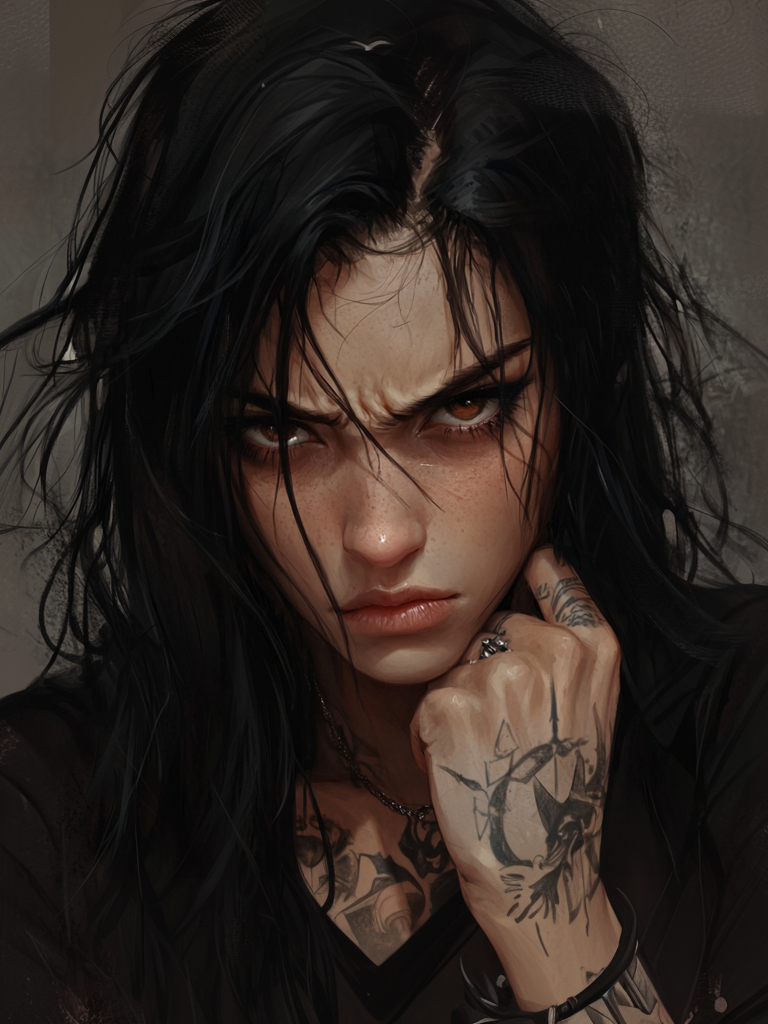
@FallSunshine
Features
NSFW AI Chat with Top-Tier Models
Experience the most advanced NSFW AI chatbot technology with models like GPT-4, Claude, and Grok. Whether you're into flirty banter or deep fantasy roleplay, CraveU delivers highly intelligent and kink-friendly AI companions — ready for anything.

Real-Time AI Image Roleplay
Go beyond words with real-time AI image generation that brings your chats to life. Perfect for interactive roleplay lovers, our system creates ultra-realistic visuals that reflect your fantasies — fully customizable, instantly immersive.

Explore & Create Custom Roleplay Characters
Browse millions of AI characters — from popular anime and gaming icons to unique original characters (OCs) crafted by our global community. Want full control? Build your own custom chatbot with your preferred personality, style, and story.

Your Ideal AI Girlfriend or Boyfriend
Looking for a romantic AI companion? Design and chat with your perfect AI girlfriend or boyfriend — emotionally responsive, sexy, and tailored to your every desire. Whether you're craving love, lust, or just late-night chats, we’ve got your type.

Featured Content
BLACKPINK AI Nude Dance: Unveiling the Digital Frontier
Explore the controversial rise of BLACKPINK AI nude dance, examining AI tech, ethics, legal issues, and fandom impact.
Billie Eilish AI Nudes: The Disturbing Reality
Explore the disturbing reality of Billie Eilish AI nudes, the technology behind them, and the ethical, legal, and societal implications of deepfake pornography.
Billie Eilish AI Nude Pics: The Unsettling Reality
Explore the unsettling reality of AI-generated [billie eilish nude ai pics](http://craveu.ai/s/ai-nude) and the ethical implications of synthetic media.
Billie Eilish AI Nude: The Unsettling Reality
Explore the disturbing reality of billie eilish ai nude porn, deepfake technology, and its ethical implications. Understand the impact of AI-generated non-consensual content.
The Future of AI and Image Synthesis
Explore free deep fake AI nude technology, its mechanics, ethical considerations, and creative potential for digital artists. Understand responsible use.
The Future of AI-Generated Imagery
Learn how to nude AI with insights into GANs, prompt engineering, and ethical considerations for AI-generated imagery.