AI Art Generators: Unleash Your Creative Vision

AI Art Generators: Unleash Your Creative Vision
The digital art landscape is undergoing a seismic shift, and at the epicenter of this revolution are AI art generators. These powerful tools are democratizing creativity, allowing anyone with an idea to bring stunning visual concepts to life without needing years of traditional artistic training. Whether you're a seasoned digital artist looking to augment your workflow, a marketer seeking eye-catching visuals, or simply someone curious about the future of art, understanding and utilizing AI art generators is becoming increasingly essential.
The core of these platforms lies in sophisticated machine learning models, primarily diffusion models, that have been trained on vast datasets of images and their corresponding textual descriptions. When you provide a text prompt, the AI interprets your words and begins to "dream up" an image, iteratively refining it until it aligns with your input. This process, while complex under the hood, is remarkably accessible to the end-user.
The Evolution of AI Art Generation
It's easy to be amazed by the current capabilities of AI art generators, but their journey has been a rapid and fascinating one. Early attempts at AI-generated imagery were often abstract and lacked coherence. However, advancements in neural networks, particularly Generative Adversarial Networks (GANs) and later diffusion models, have propelled the field forward at an astonishing pace.
GANs, for instance, involve two neural networks – a generator and a discriminator – competing against each other. The generator creates images, and the discriminator tries to distinguish between real images and those created by the generator. This adversarial process pushes the generator to produce increasingly realistic and high-quality outputs.
Diffusion models, which power many of the most popular AI art generators today, work differently. They start with random noise and gradually "denoise" it, guided by the text prompt, until a coherent image emerges. This method has proven exceptionally effective at producing detailed and aesthetically pleasing results, often with a remarkable degree of artistic flair. The ability to control the generation process through nuanced prompts has opened up entirely new avenues for artistic expression.
Key Features and Capabilities
Modern AI art generators offer a rich set of features designed to give users granular control over their creations:
- Text-to-Image Generation: This is the foundational capability. You describe what you want to see, and the AI renders it. The more descriptive and specific your prompt, the more tailored the output will be. Think about elements like subject matter, style, lighting, mood, and even camera angles.
- Image-to-Image Translation: Many platforms allow you to upload an existing image and use it as a basis for a new creation. You can then guide the AI with a text prompt to transform the original image into something entirely new, perhaps in a different style or with altered elements.
- Style Transfer: This feature enables you to apply the artistic style of one image (e.g., a Van Gogh painting) to the content of another image (e.g., a photograph of your pet). The results can be breathtaking, merging distinct visual languages into a unique hybrid.
- Inpainting and Outpainting: Inpainting allows you to select a specific area of an image and have the AI regenerate that section based on a prompt, useful for removing unwanted objects or adding new details seamlessly. Outpainting extends the canvas of an image, allowing the AI to intelligently fill in the surrounding areas and expand the scene.
- Upscaling and Enhancement: AI can be used to increase the resolution of generated images, adding detail and clarity that might not have been present in the initial generation. This is crucial for preparing images for print or high-definition displays.
- Negative Prompts: A powerful tool for refining output. By specifying what you don't want to see (e.g., "no blurry elements," "no extra limbs"), you can steer the AI away from undesirable outcomes.
Crafting Effective Prompts: The Art of the Prompt Engineer
The quality of the output from an AI art generator is directly proportional to the quality of the input prompt. This has given rise to the emerging role of the "prompt engineer," someone skilled in articulating ideas in a way that the AI can understand and execute effectively.
Here are some tips for crafting compelling prompts:
- Be Specific and Descriptive: Instead of "a cat," try "a fluffy ginger tabby cat with emerald green eyes, sitting on a sun-drenched windowsill, rendered in the style of a watercolor painting."
- Specify the Style: Mention artistic movements (Impressionism, Surrealism, Art Nouveau), specific artists (Monet, Dali, H.R. Giger), or even rendering styles (photorealistic, cinematic lighting, 3D render, pixel art).
- Consider Composition and Lighting: Use terms like "close-up," "wide shot," "dramatic lighting," "golden hour," "backlit," or "studio lighting."
- Incorporate Mood and Atmosphere: Words like "ethereal," "melancholy," "vibrant," "ominous," or "serene" can significantly influence the final image.
- Use Negative Prompts Wisely: If you're getting distorted faces, add "deformed, extra fingers, mutated" to your negative prompt.
- Experiment with Parameters: Many generators allow you to adjust parameters like aspect ratio, seed numbers (for reproducibility), and guidance scale (how closely the AI adheres to the prompt).
Think of prompt engineering as a dialogue with the AI. It requires iteration, experimentation, and a willingness to refine your language until you achieve the desired result. The nuances of language are key; a slight change in wording can lead to a vastly different image.
Applications Across Industries
The versatility of AI art generators means their applications are far-reaching:
- Graphic Design: Designers can rapidly prototype concepts, generate unique backgrounds, create custom illustrations, and explore different visual styles for branding and marketing materials. This significantly speeds up the creative process.
- Marketing and Advertising: Businesses can produce compelling visuals for social media campaigns, website banners, and advertisements without the need for expensive stock photos or lengthy photoshoots.
- Game Development: Concept artists can generate character designs, environment concepts, and asset ideas quickly, providing a rich source of inspiration and accelerating pre-production.
- Storytelling and Content Creation: Writers and bloggers can create custom illustrations for their articles, book covers, or even visual narratives to accompany their stories.
- Education: AI art can be used to visualize complex concepts, historical events, or scientific phenomena in engaging and accessible ways.
- Personal Expression: For individuals, these tools offer a unique outlet for creativity, allowing them to visualize their dreams, fantasies, or abstract ideas without technical barriers.
Imagine a small business owner needing a unique banner for their website. Instead of hiring a designer or settling for a generic stock image, they can use an AI art generator to create a custom visual that perfectly matches their brand identity, all within minutes. This democratization of high-quality visual content is a game-changer.
Addressing Common Concerns and Misconceptions
As with any transformative technology, AI art generation brings forth discussions and concerns:
- "Is it really art?" This is a philosophical debate. While the AI is the tool, the human intent, curation, and prompt engineering are the driving creative forces. Many argue that the artistry lies in the conceptualization and the skillful manipulation of the AI.
- Copyright and Ownership: The legal landscape surrounding AI-generated art is still evolving. Ownership and copyright can be complex, often depending on the specific platform's terms of service and the degree of human creative input.
- Impact on Human Artists: Some fear AI will replace human artists. However, many see it as a powerful new medium and a collaborative tool that can augment, rather than replace, human creativity. It can handle tedious tasks, freeing up artists to focus on higher-level conceptualization and refinement.
- Ethical Considerations: Concerns about the datasets used for training (potential biases, copyrighted material) and the potential for misuse (deepfakes, misinformation) are valid and require ongoing attention and ethical guidelines.
It's crucial to approach these tools responsibly, understanding their capabilities and limitations, and engaging with the ethical considerations they raise. The goal should be to leverage AI to enhance human creativity, not to diminish it.
The Future of AI Art Generation
The pace of innovation in AI art generation shows no signs of slowing down. We can anticipate:
- Increased Realism and Coherence: Models will become even better at understanding complex prompts and generating photorealistic or stylistically consistent images with fewer artifacts.
- Real-time Generation: Imagine generating art dynamically as you type or interact with a scene.
- 3D Asset Generation: AI could soon be capable of generating 3D models and environments from text descriptions, revolutionizing fields like gaming and virtual reality.
- Personalized AI Models: The ability to fine-tune AI models on specific artistic styles or personal image collections will become more accessible.
- Integration with Other AI: Expect seamless integration with AI writing assistants, music generators, and other creative AI tools for a holistic content creation experience.
The ability to generate imagery from text is just the tip of the iceberg. As these technologies mature, they will undoubtedly reshape how we create, consume, and interact with visual content in profound ways. The accessibility of tools like AI art generators means that anyone can now participate in this visual renaissance.
Whether you're looking to create fantastical landscapes, design unique characters, or simply explore the boundaries of your imagination, AI art generators offer an unprecedented gateway. Embrace the experimentation, hone your prompting skills, and discover the incredible potential that lies at the intersection of human creativity and artificial intelligence. The canvas is digital, the brush is your words, and the possibilities are limitless. Dive in and start creating today.
META_DESCRIPTION: Explore the power of AI art generators for creating stunning visuals. Learn prompt engineering and discover applications across industries.
Character
@CoffeeCruncher
@AnonVibe
@SmokingTiger
@Critical ♥
@Mercy
@Lily Victor
@SmokingTiger

@Babe
@nanamisenpai
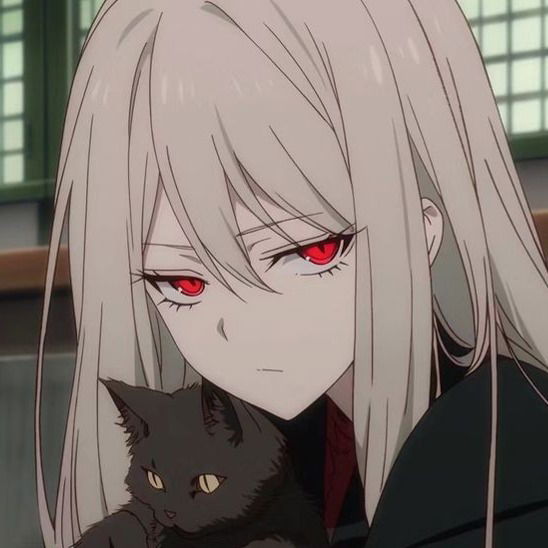
@Yoichi
Features
NSFW AI Chat with Top-Tier Models
Experience the most advanced NSFW AI chatbot technology with models like GPT-4, Claude, and Grok. Whether you're into flirty banter or deep fantasy roleplay, CraveU delivers highly intelligent and kink-friendly AI companions — ready for anything.

Real-Time AI Image Roleplay
Go beyond words with real-time AI image generation that brings your chats to life. Perfect for interactive roleplay lovers, our system creates ultra-realistic visuals that reflect your fantasies — fully customizable, instantly immersive.

Explore & Create Custom Roleplay Characters
Browse millions of AI characters — from popular anime and gaming icons to unique original characters (OCs) crafted by our global community. Want full control? Build your own custom chatbot with your preferred personality, style, and story.

Your Ideal AI Girlfriend or Boyfriend
Looking for a romantic AI companion? Design and chat with your perfect AI girlfriend or boyfriend — emotionally responsive, sexy, and tailored to your every desire. Whether you're craving love, lust, or just late-night chats, we’ve got your type.

Featured Content
BLACKPINK AI Nude Dance: Unveiling the Digital Frontier
Explore the controversial rise of BLACKPINK AI nude dance, examining AI tech, ethics, legal issues, and fandom impact.
Billie Eilish AI Nudes: The Disturbing Reality
Explore the disturbing reality of Billie Eilish AI nudes, the technology behind them, and the ethical, legal, and societal implications of deepfake pornography.
Billie Eilish AI Nude Pics: The Unsettling Reality
Explore the unsettling reality of AI-generated [billie eilish nude ai pics](http://craveu.ai/s/ai-nude) and the ethical implications of synthetic media.
Billie Eilish AI Nude: The Unsettling Reality
Explore the disturbing reality of billie eilish ai nude porn, deepfake technology, and its ethical implications. Understand the impact of AI-generated non-consensual content.
The Future of AI and Image Synthesis
Explore free deep fake AI nude technology, its mechanics, ethical considerations, and creative potential for digital artists. Understand responsible use.
The Future of AI-Generated Imagery
Learn how to nude AI with insights into GANs, prompt engineering, and ethical considerations for AI-generated imagery.