AI Art Generator: Unleash Your Creative Vision

AI Art Generator: Unleash Your Creative Vision
The digital art landscape is undergoing a seismic shift, and at its epicenter lies the revolutionary AI art generator. Gone are the days when creating stunning visual masterpieces was solely the domain of seasoned artists with years of training. Today, thanks to sophisticated artificial intelligence algorithms, anyone with an idea and a keyboard can bring their wildest imaginations to life in vibrant, breathtaking detail. This technology isn't just a novelty; it's a powerful tool that democratizes creativity, offering unprecedented accessibility and speed to visual content creation.
The Dawn of Algorithmic Aesthetics
For centuries, art creation has been a deeply human endeavor, steeped in technique, emotion, and personal expression. While the human touch remains invaluable, AI art generators are introducing a new paradigm. These systems, often powered by deep learning models like Generative Adversarial Networks (GANs) or diffusion models, learn from vast datasets of existing images and text descriptions. They then use this learned knowledge to generate entirely new visuals based on user prompts.
Think of it as a highly sophisticated collaborator. You provide the conceptual direction – a description of a scene, a character, a mood, or an abstract concept – and the AI translates that into a visual output. The results can range from photorealistic images to fantastical illustrations, abstract compositions, and everything in between. This capability opens up a universe of possibilities for artists, designers, marketers, and hobbyists alike.
How Does an AI Art Generator Work?
At a high level, most modern AI art generator tools operate on a few core principles:
- Text-to-Image Synthesis: This is the most common interaction model. Users input a textual description (a "prompt"), and the AI generates an image that attempts to match that description. The more detailed and specific the prompt, the more nuanced the output can be.
- Image-to-Image Translation: Some tools allow users to provide an existing image as a starting point. The AI can then modify this image based on a text prompt, change its style, or even reconstruct it entirely.
- Latent Space Exploration: AI models often work within a "latent space," a multi-dimensional representation of visual concepts. By navigating this space, the AI can interpolate between different ideas, blend styles, and create novel combinations that might not be easily conceived by a human alone.
The underlying technology is complex, involving massive neural networks trained on billions of image-text pairs. Models like DALL-E, Midjourney, and Stable Diffusion have become household names, each with its unique strengths and artistic sensibilities. They are constantly evolving, with new versions and improvements released regularly, pushing the boundaries of what's possible.
Beyond the Prompt: Mastering the Art of AI Generation
While the ease of typing a prompt is alluring, achieving truly exceptional results with an AI art generator often requires more than just a basic description. It's about learning to communicate effectively with the AI, understanding its capabilities and limitations, and iteratively refining your input.
The Power of the Prompt: Crafting Effective Descriptions
A well-crafted prompt is the key to unlocking the AI's potential. Consider these elements:
- Subject: Clearly define the main subject of your image. Be specific. Instead of "a dog," try "a fluffy golden retriever puppy with bright, curious eyes."
- Action/Pose: What is the subject doing? "Sitting," "running," "gazing at the stars."
- Setting/Environment: Where is the subject located? "In a sun-drenched meadow," "on a futuristic cityscape at night," "within a mystical forest."
- Style: This is crucial. Do you want a "photorealistic image," "an oil painting in the style of Van Gogh," "a watercolor sketch," "a 3D render," "anime style," or "cyberpunk aesthetic"?
- Lighting: Describe the lighting conditions. "Golden hour," "dramatic chiaroscuro," "soft ambient light," "neon glow."
- Mood/Atmosphere: Convey the feeling you want the image to evoke. "Serene," "chaotic," "melancholy," "joyful."
- Camera Angle/Composition: Specify the viewpoint. "Close-up portrait," "wide-angle landscape," "overhead shot," "Dutch angle."
- Negative Prompts: Many tools allow you to specify what you don't want in the image (e.g., "ugly, deformed, blurry, low quality").
Experimentation is paramount. Try different combinations of keywords, adjust the weighting of certain terms, and explore the nuances of each AI model's interpretation. What one AI might render as a masterpiece, another might interpret in a completely unexpected way.
Iteration and Refinement: The Creative Loop
Rarely will the first generation be perfect. The process of creating AI art is often an iterative one:
- Initial Prompt: Start with your core idea.
- Generate: Run the prompt through the AI.
- Analyze: Evaluate the output. What works? What doesn't?
- Refine Prompt: Adjust keywords, add details, or use negative prompts to steer the AI.
- Regenerate: Repeat until you achieve a satisfactory result.
Many platforms also offer features like "variations," allowing you to generate similar images based on a successful output, or "inpainting/outpainting," where you can selectively regenerate parts of an image or extend its boundaries.
Applications Across Industries
The impact of AI art generation extends far beyond the realm of digital art enthusiasts. Its applications are transforming various sectors:
- Graphic Design: Designers can rapidly prototype concepts, generate unique assets for websites and marketing materials, and explore diverse visual styles with unparalleled speed. Imagine creating a dozen unique banner ad concepts in minutes rather than hours.
- Marketing and Advertising: Businesses can produce eye-catching visuals for social media campaigns, product mockups, and promotional content without the need for expensive stock photos or lengthy photoshoots.
- Game Development: Concept artists and environment designers can use AI to quickly generate character designs, background elements, and textures, accelerating the pre-production pipeline.
- Storytelling and Publishing: Authors and illustrators can create custom book covers, character visualizations, and scene illustrations to accompany their narratives, adding a unique visual dimension to their work.
- Education: AI art tools can serve as educational aids, helping students understand concepts in art history, explore different artistic techniques, and develop their own creative expression.
- Personal Expression: For individuals, it's a new avenue for creativity, allowing them to visualize dreams, create personalized avatars, or simply explore their imagination in a visual medium.
The ability to generate high-quality visuals on demand is a game-changer, empowering creators and businesses to be more agile, innovative, and visually compelling.
Addressing Common Misconceptions and Challenges
Despite its incredible potential, AI art generation is not without its debates and challenges:
The "Is it Art?" Debate
One of the most persistent discussions revolves around whether AI-generated images qualify as "art." Critics argue that art requires human intent, emotion, and skill, which AI inherently lacks. Proponents counter that the human is still the artist, using the AI as a sophisticated brush or tool. The prompt engineer, the curator of the output, and the final editor all play crucial roles in the creative process. The intent and vision originate with the human user.
Copyright and Ownership
The legal landscape surrounding AI-generated art is still evolving. Questions about copyright ownership – does it belong to the AI developer, the user who wrote the prompt, or is it in the public domain? – are complex and vary by jurisdiction and the specific AI tool used. Many platforms have terms of service that clarify usage rights.
Ethical Considerations and Bias
AI models are trained on existing data, which can contain biases present in society. This can lead to AI generating images that reflect or even amplify stereotypes related to race, gender, or other characteristics. Developers are actively working to mitigate these biases, but it remains an ongoing challenge. Responsible use involves being aware of these potential issues and actively working to counteract them.
The Skill vs. Tool Argument
Some worry that AI art generators devalue traditional artistic skills. However, history shows that new technologies often augment rather than replace existing crafts. Photography didn't eliminate painting; it created a new art form and influenced painting itself. Similarly, AI art generators can be seen as powerful new tools that expand the creative toolkit, rather than a replacement for human artistry. Mastering traditional skills can even enhance one's ability to guide AI effectively.
The Future is Generative
The field of AI art generation is advancing at an exponential pace. We are witnessing the birth of entirely new artistic movements and creative workflows. As the technology becomes more sophisticated and accessible, its integration into our daily lives and creative processes will only deepen.
Whether you're a seasoned professional looking to augment your workflow or a curious newcomer eager to explore your creative potential, the AI art generator offers a gateway to a new era of visual expression. It’s a testament to human ingenuity, pushing the boundaries of what we thought possible and democratizing the creation of beauty and meaning. The canvas is now digital, the brush is algorithmic, and the only limit is your imagination.
Dive in, experiment, and discover the incredible power of AI to bring your visions to life. The future of art is here, and it's being generated.
META_DESCRIPTION: Explore the power of AI art generators to create stunning visuals. Learn how to craft prompts, understand the technology, and unlock your creative potential.
Character
@NetAway

@AI_Visionary
@Dean17
@Sebastian
@Luckynohara
@Critical ♥
@Nyx
@RedGlassMan
@FallSunshine
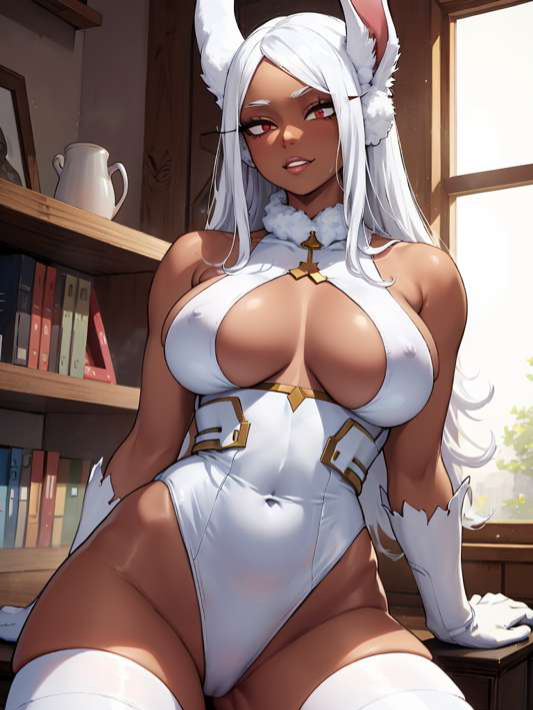
@x2J4PfLU
Features
NSFW AI Chat with Top-Tier Models
Experience the most advanced NSFW AI chatbot technology with models like GPT-4, Claude, and Grok. Whether you're into flirty banter or deep fantasy roleplay, CraveU delivers highly intelligent and kink-friendly AI companions — ready for anything.

Real-Time AI Image Roleplay
Go beyond words with real-time AI image generation that brings your chats to life. Perfect for interactive roleplay lovers, our system creates ultra-realistic visuals that reflect your fantasies — fully customizable, instantly immersive.

Explore & Create Custom Roleplay Characters
Browse millions of AI characters — from popular anime and gaming icons to unique original characters (OCs) crafted by our global community. Want full control? Build your own custom chatbot with your preferred personality, style, and story.

Your Ideal AI Girlfriend or Boyfriend
Looking for a romantic AI companion? Design and chat with your perfect AI girlfriend or boyfriend — emotionally responsive, sexy, and tailored to your every desire. Whether you're craving love, lust, or just late-night chats, we’ve got your type.

Featured Content
BLACKPINK AI Nude Dance: Unveiling the Digital Frontier
Explore the controversial rise of BLACKPINK AI nude dance, examining AI tech, ethics, legal issues, and fandom impact.
Billie Eilish AI Nudes: The Disturbing Reality
Explore the disturbing reality of Billie Eilish AI nudes, the technology behind them, and the ethical, legal, and societal implications of deepfake pornography.
Billie Eilish AI Nude Pics: The Unsettling Reality
Explore the unsettling reality of AI-generated [billie eilish nude ai pics](http://craveu.ai/s/ai-nude) and the ethical implications of synthetic media.
Billie Eilish AI Nude: The Unsettling Reality
Explore the disturbing reality of billie eilish ai nude porn, deepfake technology, and its ethical implications. Understand the impact of AI-generated non-consensual content.
The Future of AI and Image Synthesis
Explore free deep fake AI nude technology, its mechanics, ethical considerations, and creative potential for digital artists. Understand responsible use.
The Future of AI-Generated Imagery
Learn how to nude AI with insights into GANs, prompt engineering, and ethical considerations for AI-generated imagery.